
The Ultimate Adventure & Travel Photography Glossary
This website contains affiliate links from trusted partners. If you purchase through a link on this site, I may earn a commission at no extra cost to you. As an Amazon Associate, I earn from qualifying purchases. See my Privacy Policy and Disclosure for more information.
Whether you’re photographing mountain summits, wildlife encounters, bustling city streets, or your latest road trip, photography comes with its own jargon.
If you’ve ever heard someone talk about aperture, bokeh, dynamic range, or leading lines and wondered what they were talking about, you’re in the right place.
When I first started photography, I could have sworn that photographers were speaking another language!
This adventure and travel photography glossary breaks down the most common photography terms into plain English so you can spend less time feeling confused and more time creating photos you love.
Camera Basics
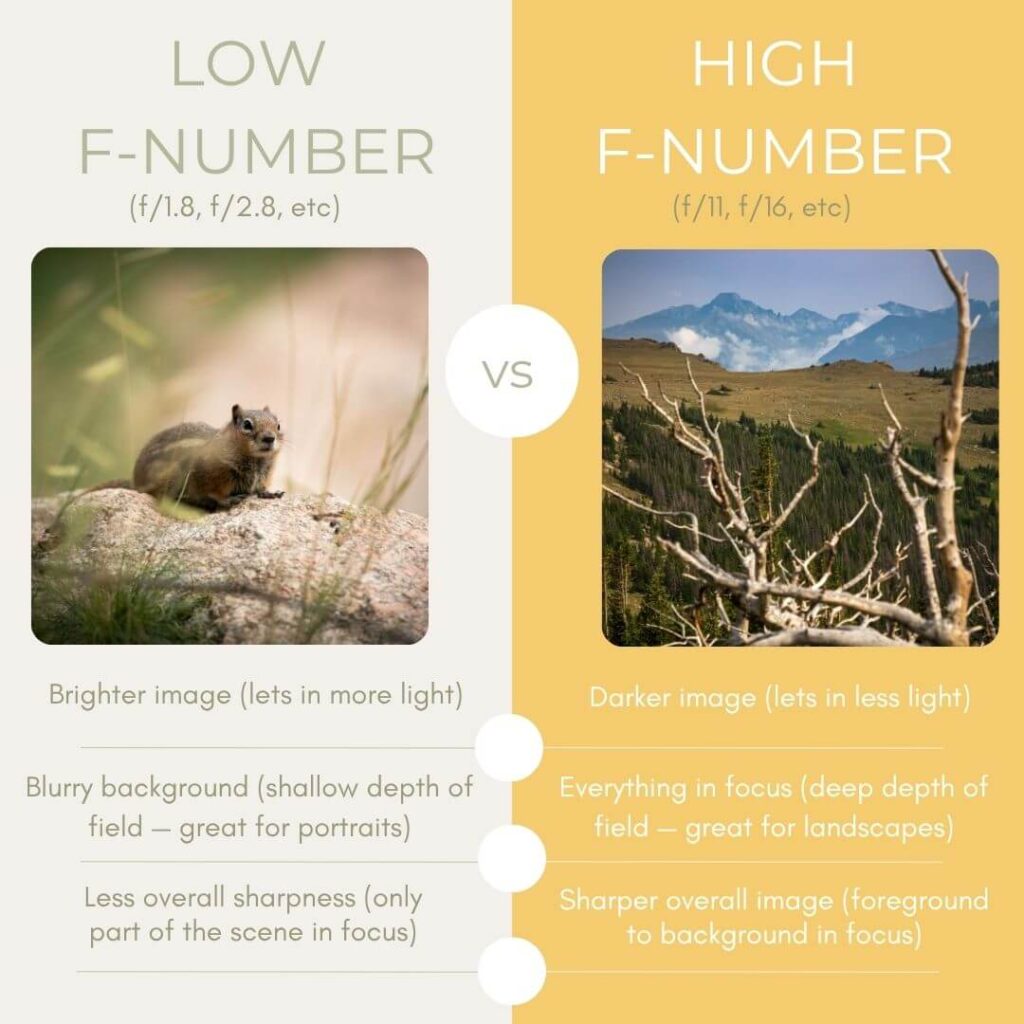
Aperture
The opening inside your lens that controls how much light enters the camera.
A wider aperture (like f/1.8) lets in more light and creates a blurrier background.
Also called f-stop or f-number.
Shutter Speed
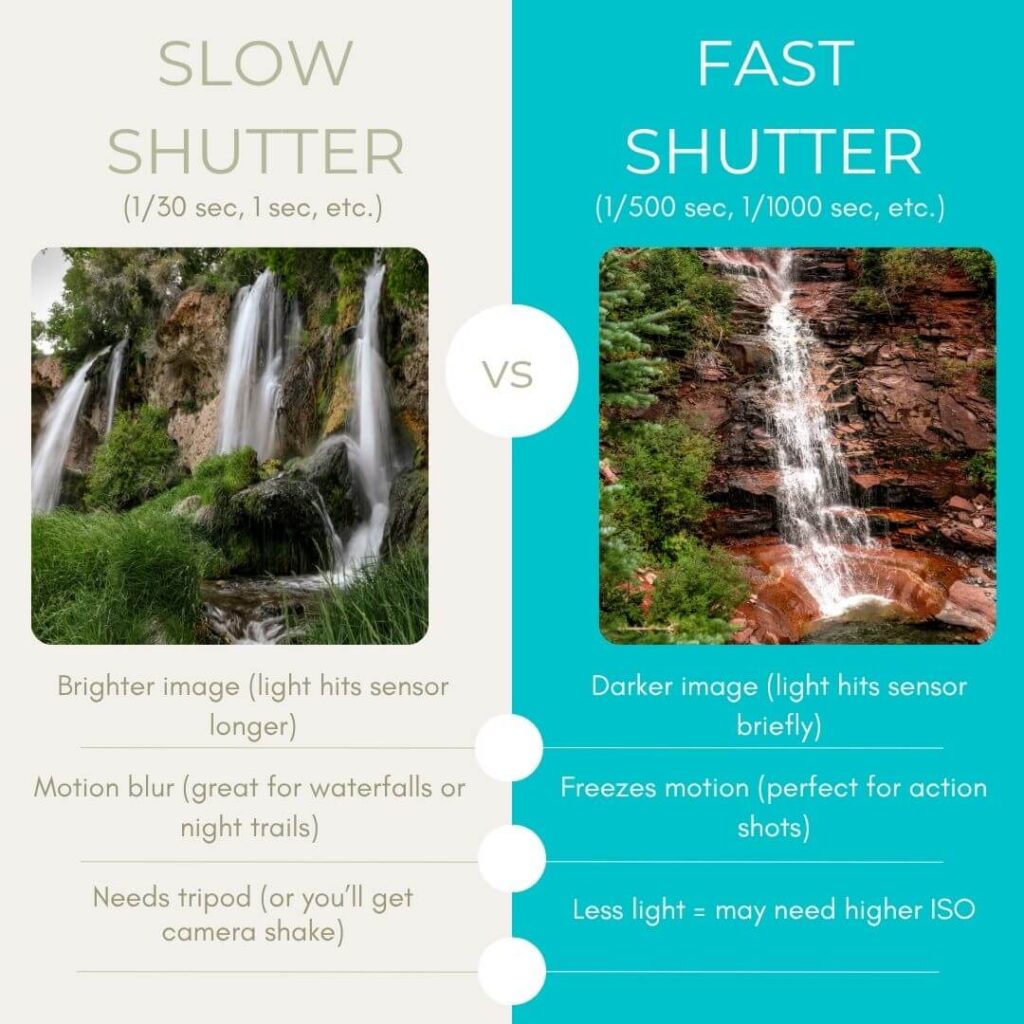
How long your camera’s shutter stays open.
Fast shutter speeds freeze motion, while slow shutter speeds create motion blur.
ISO
Your camera’s sensitivity to light.
Higher ISO helps in dark conditions but can introduce grain or noise.

Exposure Triangle
The relationship between aperture, shutter speed, and ISO. These three settings work together to create a properly exposed image.
Exposure
The overall brightness of a photograph.
RAW
An unprocessed image file that contains maximum detail and editing flexibility. Shoot in this one and bring extra SD cards!
JPEG
A compressed image file that is smaller and ready to share but contains less editing flexibility.
I rarely shoot in JPEG, but when it comes time to share, most of my images are JPEG.
My Go-To Travel Cameras: Canon EOS M50 mark II | Canon EOS 5D mark IV | What’s in My Camera Bag?
White Balance
A setting that helps colors appear natural under different lighting conditions.
You can set this on your camera, or edit it later in Lightroom.
Histogram
A graph that shows the brightness levels in your image.
Watch for spikes in the extreme left and right sides (shadows and highlights)

Metering
The method your camera uses to determine exposure.
For my camera, I half press down on the shutter and look at the little meter in my view finder to make sure it’s near the middle.
Back Button Focus
A focusing technique where autofocus is assigned to a button on the back of the camera instead of the shutter button.
This allows you to focus once and recompose without the camera constantly refocusing.
Composition Terms
Note that while all of these generally make for a pleasing photograph, you can be a little photography rebel. The key is knowing when to intentionally break the rules.
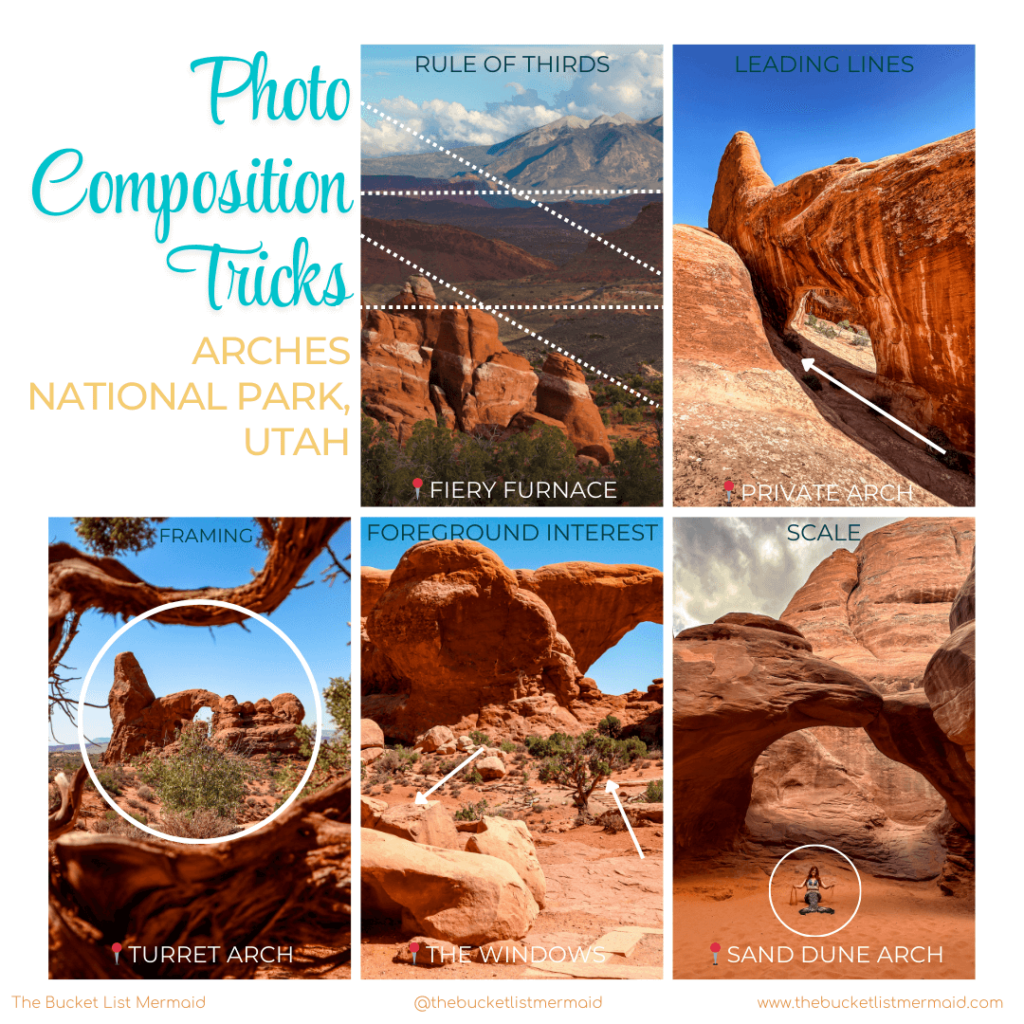
Rule of Thirds
A composition technique that divides an image into nine equal sections.
Placing subjects along these lines often creates a more balanced photo.
Leading Lines
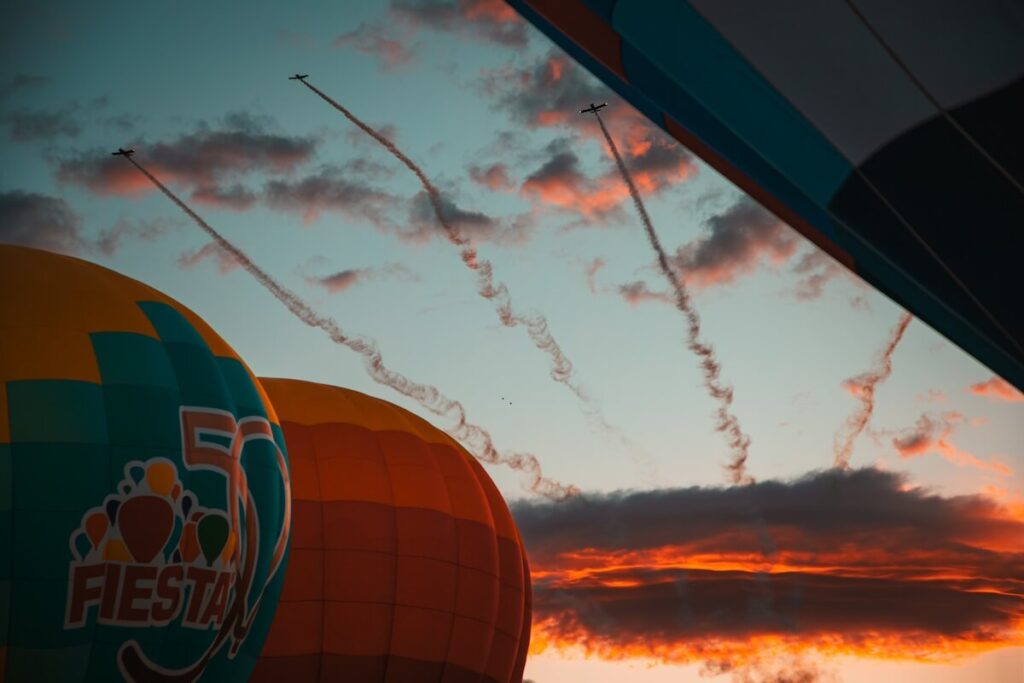
Lines that guide the viewer’s eye through an image.
Framing
Using natural elements like trees, windows, or arches to surround your subject.
Symmetry
When both sides of an image appear balanced or mirrored.
Negative Space
The empty area around a subject that helps it stand out.
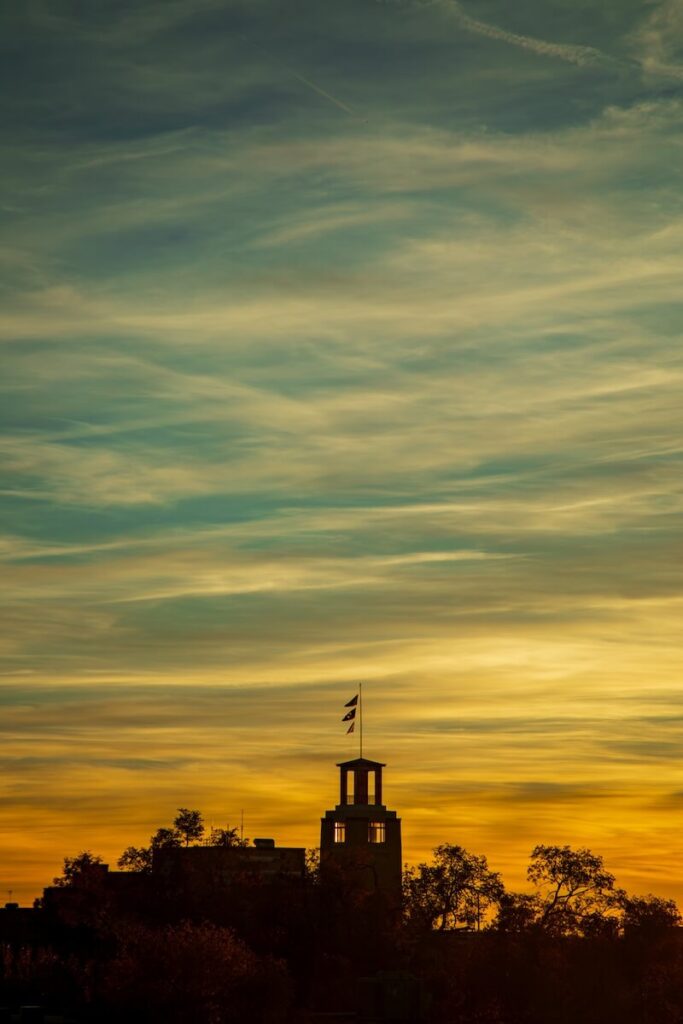
Foreground Interest
An object placed in the foreground to add depth and dimension.
Layers
Using foreground, middle ground, and background elements to create depth.
Balance
The visual weight of elements within a photograph.
Fill the Frame
Composing so the subject occupies most of the image.
Perspective
The angle or viewpoint from which a photo is taken.
Depth
The sense of three-dimensionality in an image.
Scale
Showing the size of something by including a recognizable subject nearby.
Travel Photography Terms
Golden Hour
The hour shortly after sunrise and before sunset when light is soft and warm.
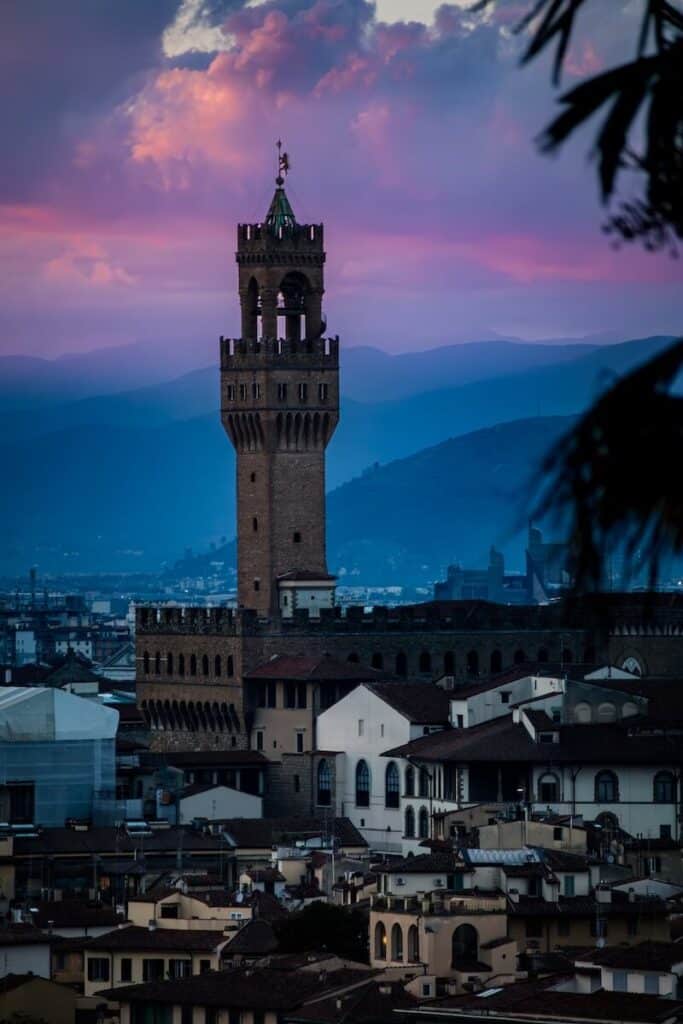
Blue Hour
The period just before sunrise or after sunset when the sky takes on rich blue tones.
Midday Light
The harsh light that occurs when the sun is high overhead, typically between late morning and late afternoon.
Photographers typically avoid this time due to harsh shadows and blown out highlights. But this is adventure…and sometimes you don’t have a choice.
Environmental Portrait
A portrait that shows a person within their surroundings.
Storytelling Shot
A photo that communicates a larger story or experience.
Read More – What Kind of Adventure Photographer Are You?
Hero Shot
The standout image that best represents a destination or adventure.
Establishing Shot
A wide photo that introduces a location.
Candid
An unposed photograph capturing genuine moments.
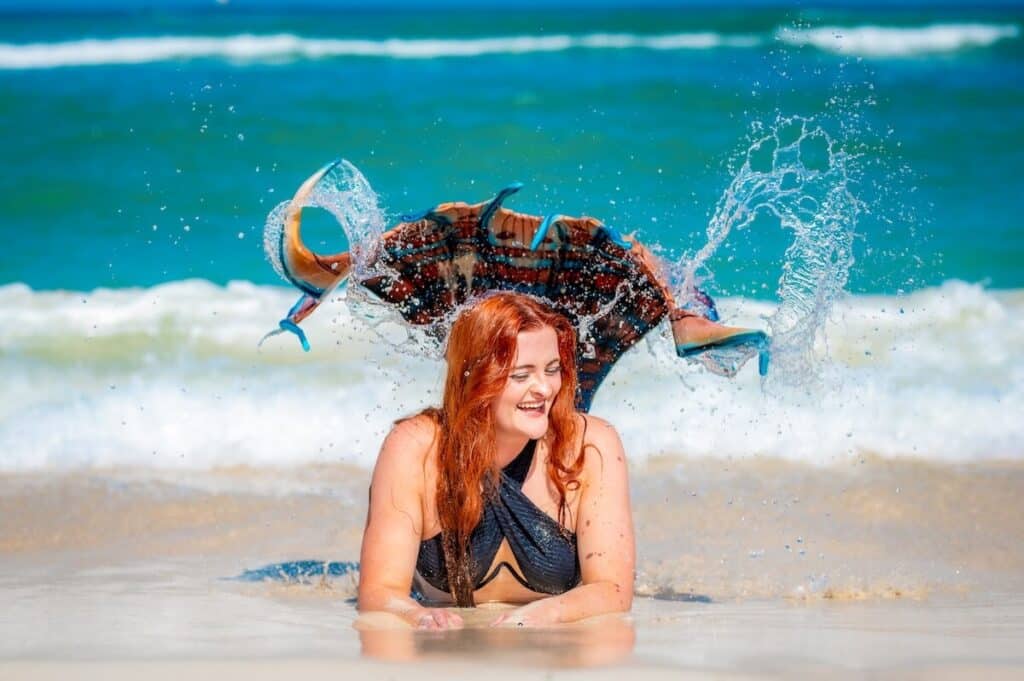
Street Photography
Photography that documents everyday life in public places.
Cultural Photography
Images that capture traditions, customs, and local experiences.
Documentary Photography
Photography focused on telling a true story or documenting events.
Adventure Photography Terms
Summit Shot
A photograph taken from the top of a mountain or at the completion of an adventure.
Adventure Portrait
A portrait that highlights both the subject and the outdoor environment.
Action Shot
A photo capturing movement or activity.
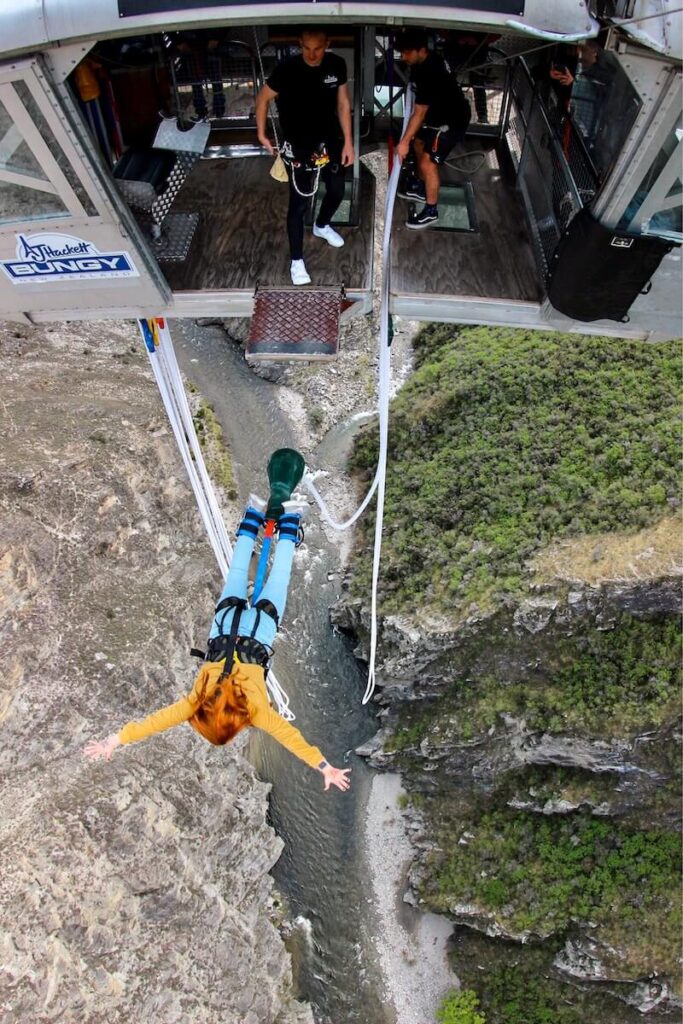
Trail Shot
An image showing a hiker, biker, or explorer on a trail.
Wander Shot
A popular travel photography style showing a person walking away from the camera.
Point of View (POV)
A photo taken from the photographer’s perspective.
Camp Scene
Images that document the experience of outdoor living and adventure.
Lifestyle Photography
Images that capture real experiences and activities.
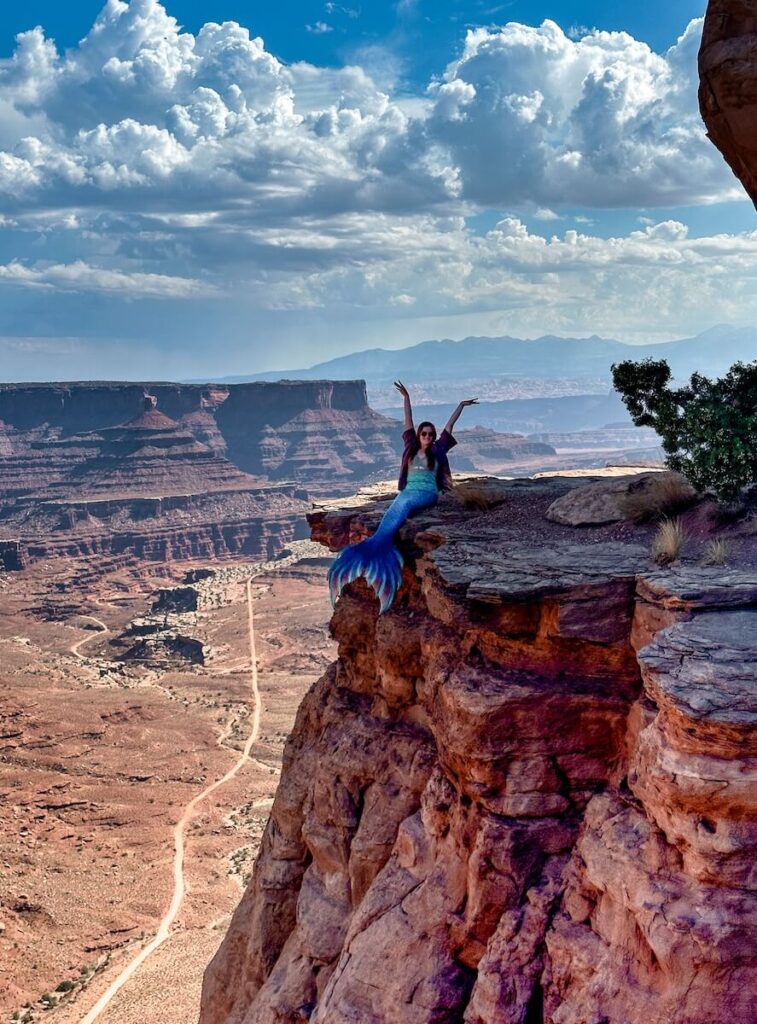
Epic Scale Shot
A composition that emphasizes the vastness of a landscape compared to a person.
Landscape Photography Terms
Dynamic Range
The amount of detail a camera can capture in both shadows and highlights.
When in doubt, check the histogram.
Long Exposure
A photograph taken using a slow shutter speed to blur movement.
I did a lot of long exposure shots with waterfalls to demonstrate.
Focus Stacking
Combining multiple images with different focus points to create maximum sharpness.
Bracketing
Taking multiple exposures of the same scene at different brightness levels.
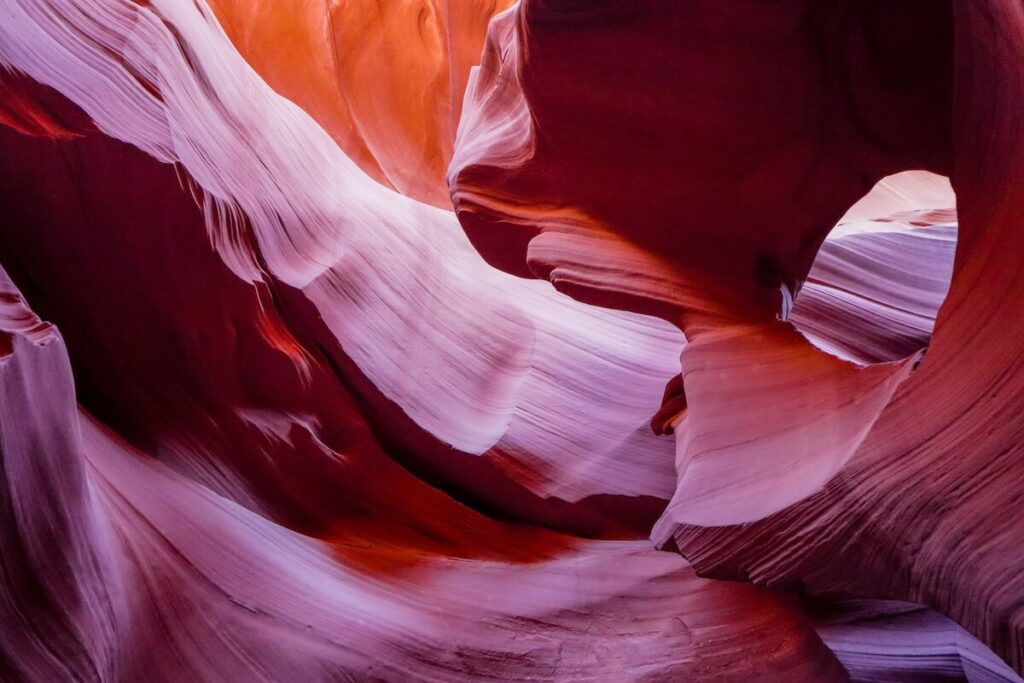
HDR (High Dynamic Range)
Combining multiple exposures to retain detail in bright and dark areas.
I discussed this quite a bit when photographing Antelope Canyon in Arizona.
Hyperfocal Distance
The focus distance that allows you to keep the greatest amount of your scene sharp from front to back.
Imagine you’re photographing wildflowers in the foreground with mountains in the background.
If you focus on the flowers, the mountains may become blurry. If you focus on the mountains, the flowers may become blurry.
Hyperfocal distance is the sweet spot between the two.
For most adventure photographers:
- Wide-angle lens
- Aperture around f/8 to f/11
- Focus roughly one-third into the scene
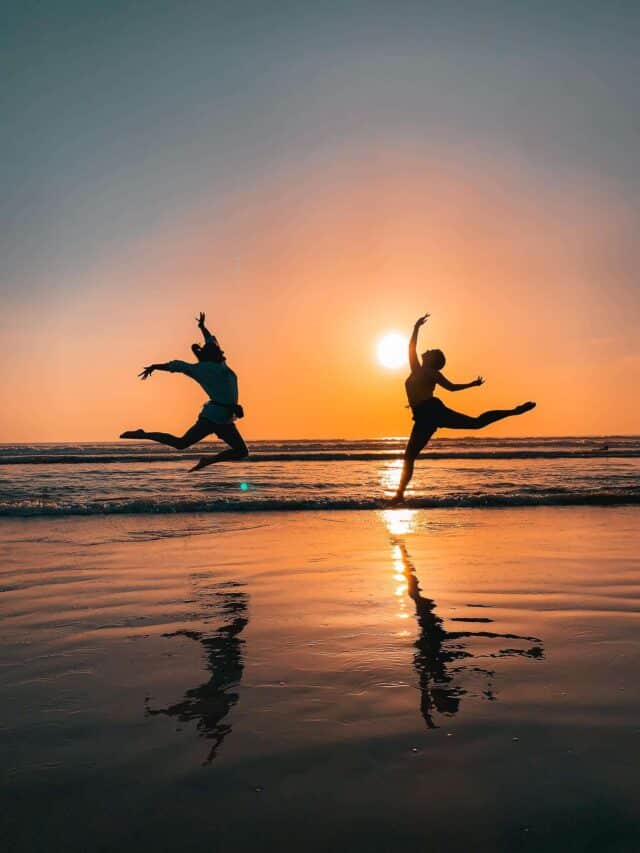
Silhouette
A dark subject photographed against a bright background.
Foreground Anchor
An object placed in the foreground to guide the viewer into the image.
Panorama
A wide image created by stitching multiple photos together.
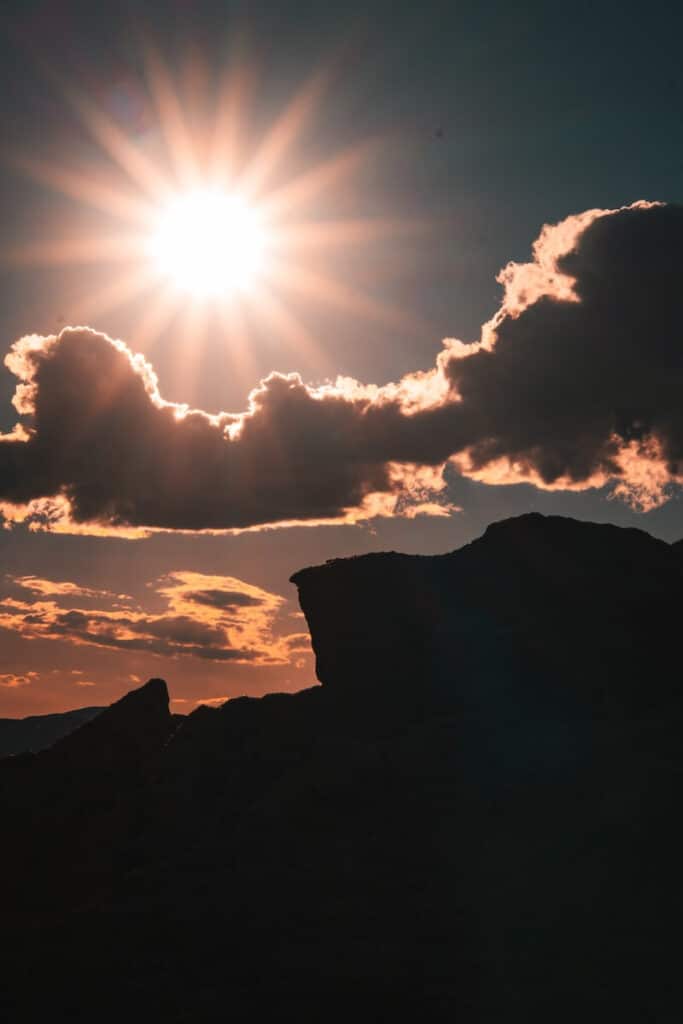
Sunstar
The starburst effect created when photographing the sun with a narrow aperture.
Hint: Set your f-stop to around f/20.
Wildlife Photography Terms
Focal Length
The magnification provided by a lens, measured in millimeters.
Here are some common focal lengths:
| Focal Length | Best For |
|---|---|
| 14-24mm | Epic landscapes, night photography |
| 16-35mm | Travel, landscapes, adventure |
| 24mm | Environmental portraits |
| 35mm | Travel storytelling |
| 50mm | Everyday photography |
| 85mm | Portraits |
| 70-200mm | Wildlife, action, compression |
| 100-400mm | Wildlife photography |
| 150-600mm | Birds and distant wildlife |
Reach
A photographer’s ability to fill the frame with distant subjects.
Burst Mode
Taking multiple photos rapidly by holding down the shutter button.
Also called high speed continuous shooting.
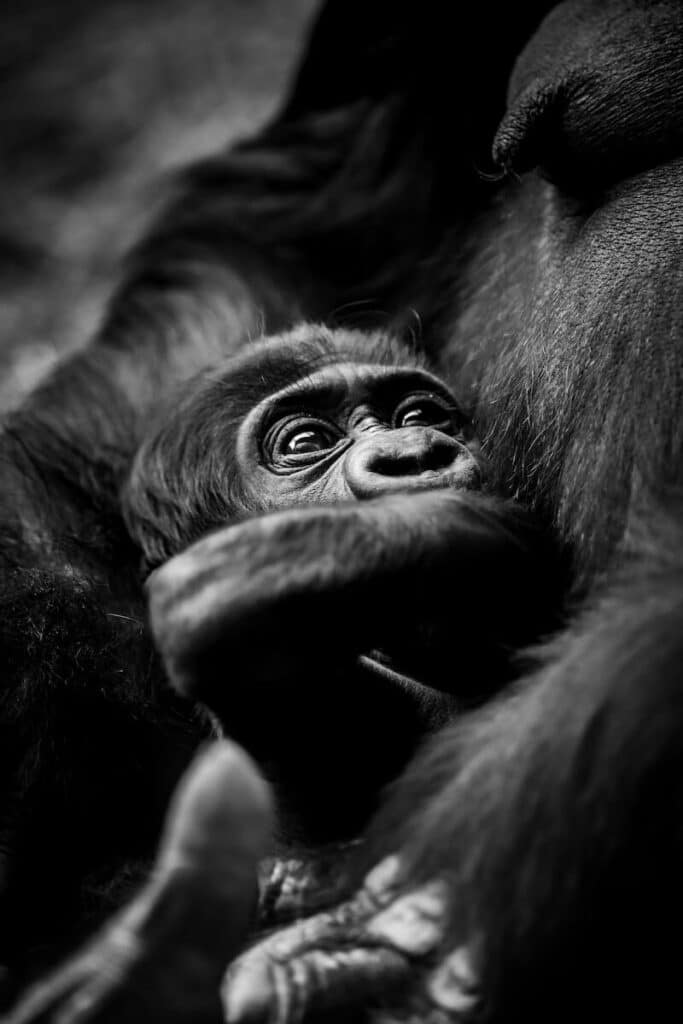
Eye Autofocus
A camera feature that automatically focuses on a subject’s eye.
My camera…tries it’s hardest (haha!)
Tracking Autofocus
A focus mode that follows moving subjects.
Common Tracking Modes:
- Single Point AF: You choose one focus point and place it directly on your subject. Great for perched birds, landscapes, and stationary subjects.
- Zone AF: Your camera uses a group of focus points rather than just one. Useful when subjects move unpredictably.
- Center Tracking :The camera prioritizes subjects near the center of the frame. Often easier for beginners learning wildlife photography.
- AI Servo (Canon) / AF-C (Nikon, Sony, Fujifilm): Continuous autofocus mode that constantly adjusts focus while the shutter button is half-pressed. Essential for wildlife, sports, and action photography.
- Subject Detection: Modern cameras can recognize people, animals, birds, vehicles, and even airplanes, automatically tracking them across the frame.
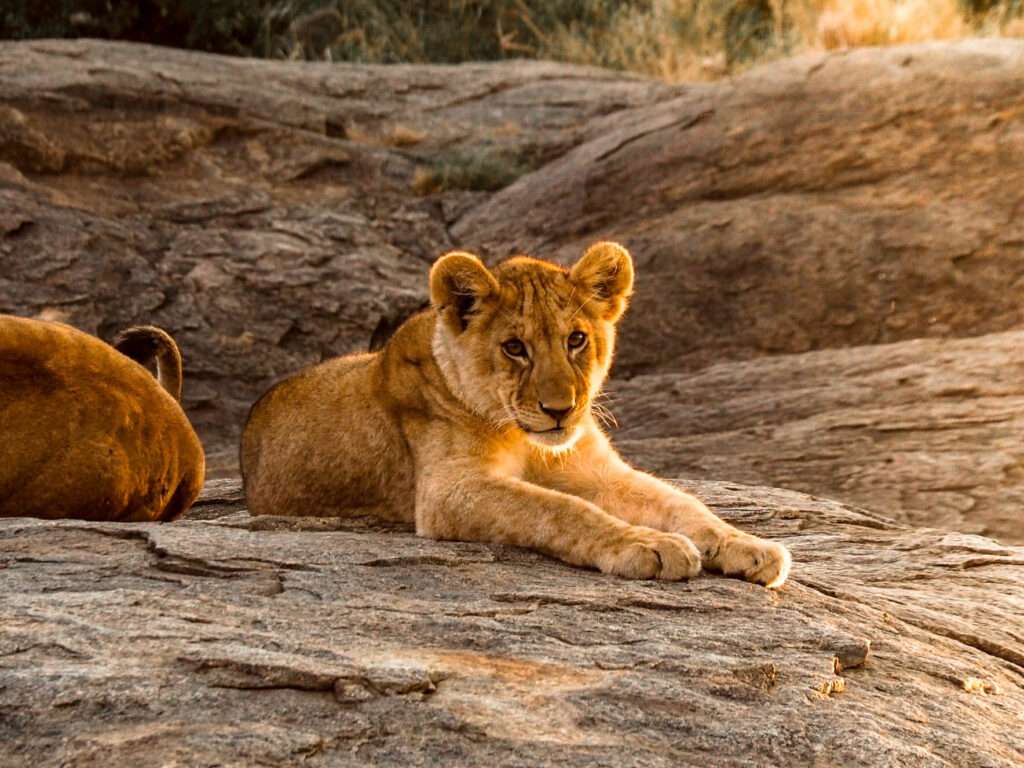
Backlighting
When light comes from behind the subject.
Wildlife Etiquette
Practices that minimize disturbance to animals while photographing them.
Camouflage
Blending into the environment to avoid startling wildlife.
Behavior Shot
A photo capturing an animal performing a natural activity.
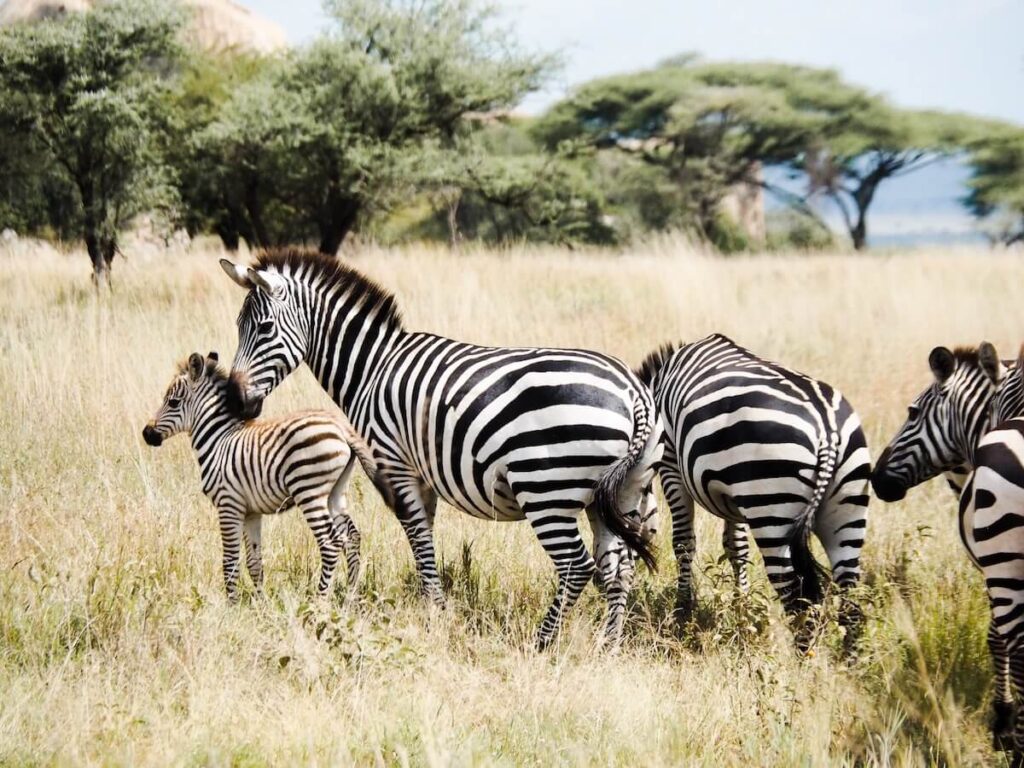
Habitat Shot
A wildlife image showing both the animal and its environment.
Editing & Post-Processing Terms
Lightroom
Adobe’s popular photo editing software.
I use Lightroom for all of my post-processing.
If you are interested in editing, I would highly recommend checking out my in-depth Adventure Editing Guide or my eBook ↓
Photoshop
Photoshop is Adobe’s advanced image editing software.
Cropping
Removing portions of an image to improve composition.
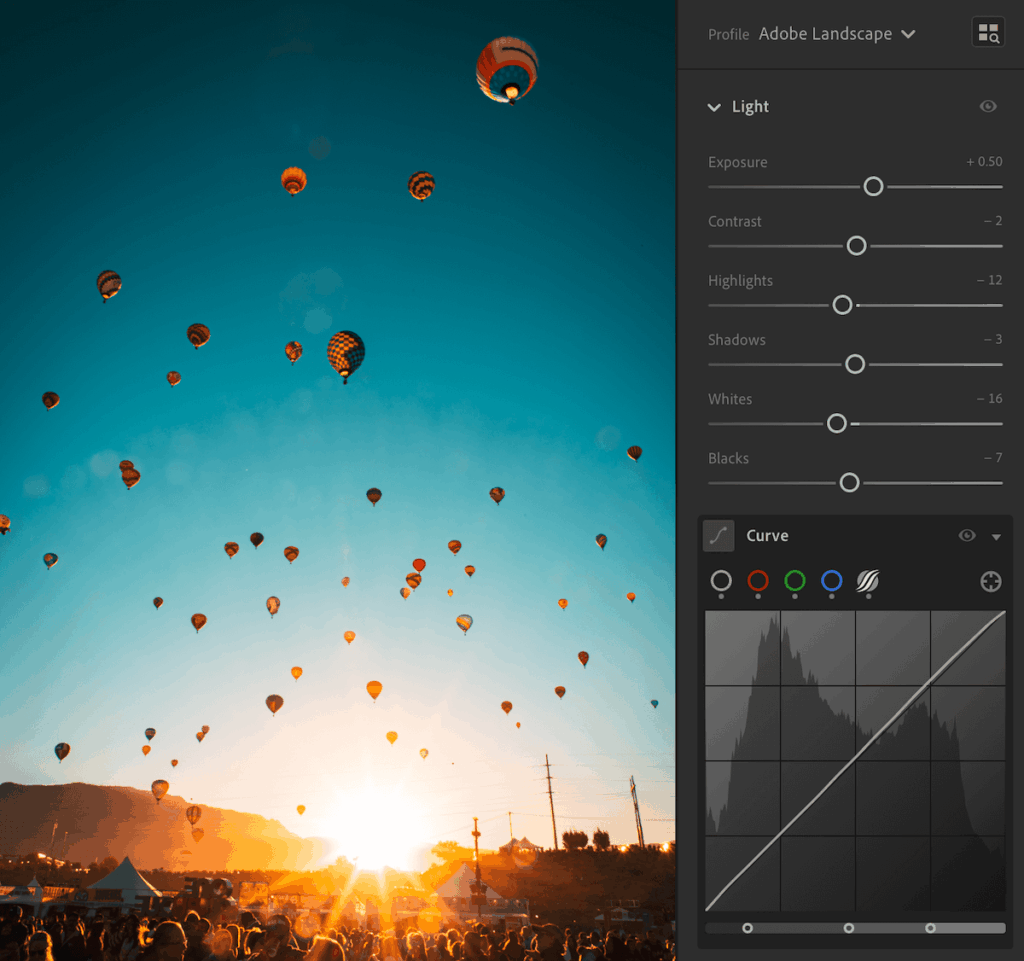
Contrast
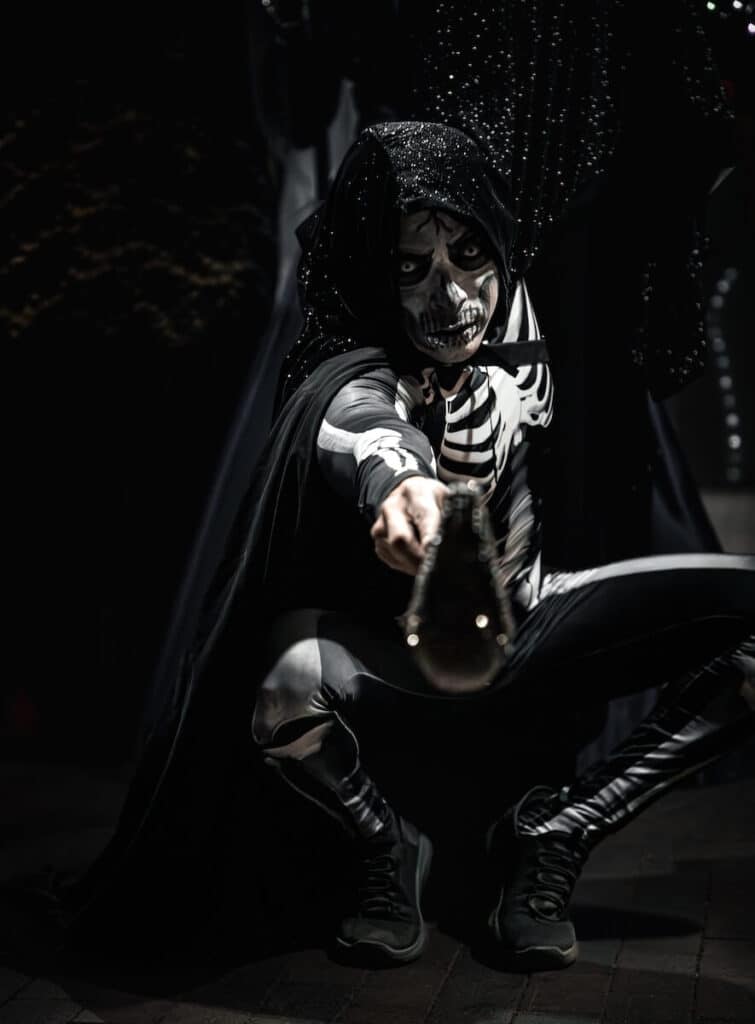
The difference between bright and dark areas.
Too Much Contrast:
- Blacks become pure black
- Whites become pure white
- Detail disappears
Too Little Contrast:
- Image looks flat
- Colors feel muted
- Nothing stands out
Highlights
The brightest parts of an image.
Highlights Too High:
- Clouds lose texture
- Snow becomes solid white
- Water reflections become featureless
Highlights Too Low:
- Photo can look dull
- Bright areas lose sparkle
Shadows
The darkest areas of an image.
Shadows Too High:
- Image can look muddy
- Photos lose depth
Shadows Too Low:
- Detail disappears into black areas
Clarity
A tool that enhances midtone contrast.
Too Much Clarity:
- Skin looks rough
- Landscapes become crunchy
- Image looks overly processed
Too Little Clarity:
- Image may feel soft and lifeless
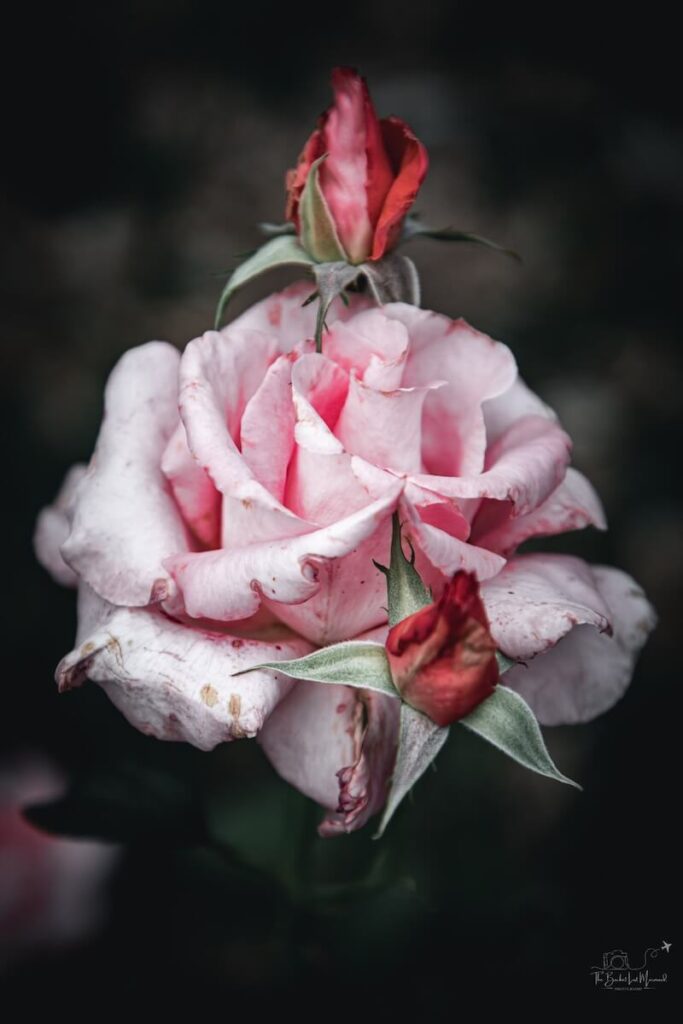
Saturation
The intensity of all colors within an image.
Too Much Saturation:
- Neon grass
- Nuclear-blue skies
- Orange-looking people
Too Little Saturation:
- Colors feel washed out
Vibrance
A more selective version of saturation that protects skin tones.
Too Much Vibrance:
- Colors start looking unrealistic
Too Little Vibrance:
- Photo may lack energy
For travel photography, vibrance is often safer than saturation.
Sharpening
Increasing perceived detail in an image.
Too Much Sharpening:
- Halos around objects
- Grain becomes obvious
- Image looks crunchy
Too Little Sharpening:
- Photo appears soft
Noise Reduction
Reducing grain caused by high ISO settings.
Too Much Noise Reduction:
- Skin looks waxy
- Details disappear
- Wildlife fur looks smeared
Too Little Noise Reduction:
- Excessive grain distracts from the image
Preset
A saved editing recipe that can be applied to photos.
Warning: Presets are not “click-and-go”. Every photo should be tweaked.
Content Creator & Video Terms
B-Roll
Supplemental footage used to support the main story.
A-Roll
Primary footage where the presenter speaks directly to the camera.
You can see both A-roll and B-roll in my London Attractions Review Video below!
Hook Shot
The opening visual designed to grab attention.
Sequence
A collection of clips showing an action from multiple angles.
Voiceover
Narration added during editing.
Cinematic
A visual style designed to feel like a movie.
Frame Rate
The number of frames recorded per second.
Here are some common frame rates:
| Frame Rate | Best For |
|---|---|
| 24fps | Cinematic storytelling |
| 30fps | YouTube and general video |
| 60fps | Smooth motion and slow motion |
| 120fps | Dramatic slow motion |
| 240fps | Extreme slow motion |
Time-Lapse
A series of photos combined to show time passing quickly.
The camera stays in one place.
Hyperlapse
A moving time-lapse sequence.
The camera changes position.
Timelapse vs Hyperlapse
Time-lapse = time moving
Hyperlapse = time AND location moving
Drone Shot
Footage captured using an aerial drone.
My favorite drone for travelers are the HoverAir and the DJI Mini.
Read More About Adventure Gear – Best Travel Photography Backpacks | Best Gifts for Adventurers
A Thought on This Adventure Photography Glossory
Photography isn’t about memorizing complicated terms. It’s about using these tools and techniques to tell better stories from your adventures.
The more familiar you become with this language, the easier it becomes to understand tutorials, improve your camera skills, and capture images that help you relive your adventures long after you’ve returned home.
More Photography Inspo
More Adventure Travel Resources
Adventure Bucket List Resources
I am here to help your travel adventures go as smoothly as possible! That way you can check off that bucket list with minimal complications and spending!
SHOP – Shop the best adventure gear and essentials on my Amazon Storefront – handpicked by a full-time adventuring mermaid!
AIRFARE – There are a few I use, but Aviasales is normally my go-to for flights without any extra fees or markups.
ACCOMMODATION – My two favorites are Booking.Com for hotels and VRBO for rentals.
GUIDED TOURS – If you are looking for quick and easy tours, check out GetYourGuide and Viator.
MULTI-DAY TOURS – For more in-depth tours that span several days, TourHub has many great options with reputable travel companies. Use my code (ALEXANDRA1GURU) for up to 5% off your next bucket list adventure.
TRANSPORTATION – You can either rent a car yourself with Discover Cars or do a guided bus tours like Big Bus Tours.
SIM CARDS – Avoid expensive roaming charges with an eSim card with Airalo. Personally, I prefer wifi boxes, and recommend WiFi Candy (get 10% of with the code THEBUCKETLISTMERMAID).
TRAVELER’S INSURANCE – Check out VisitorsCoverage for affordable insurance plans. If you are a nomad or remote worker, I would check out SafetyWing.
SEE MORE – Adventure Resources | Photography Resources
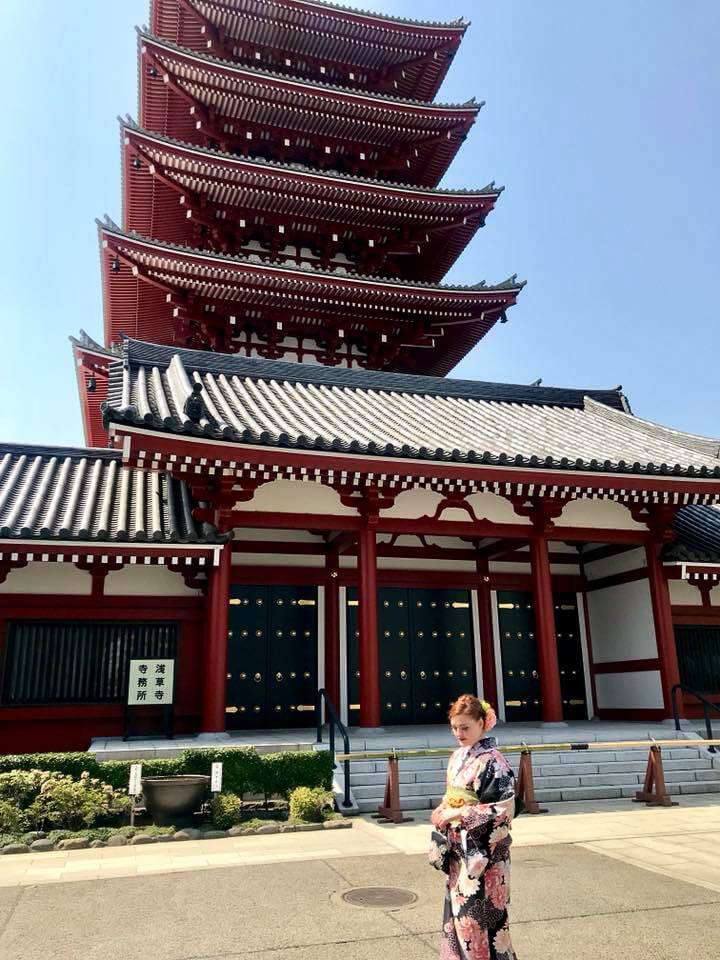
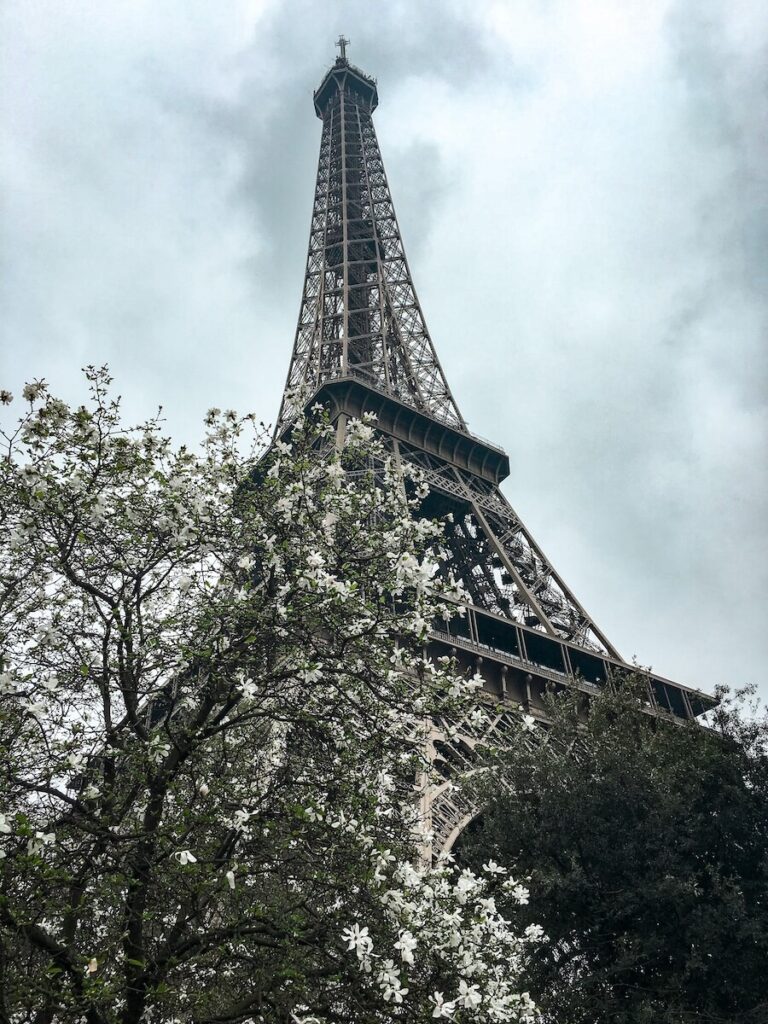
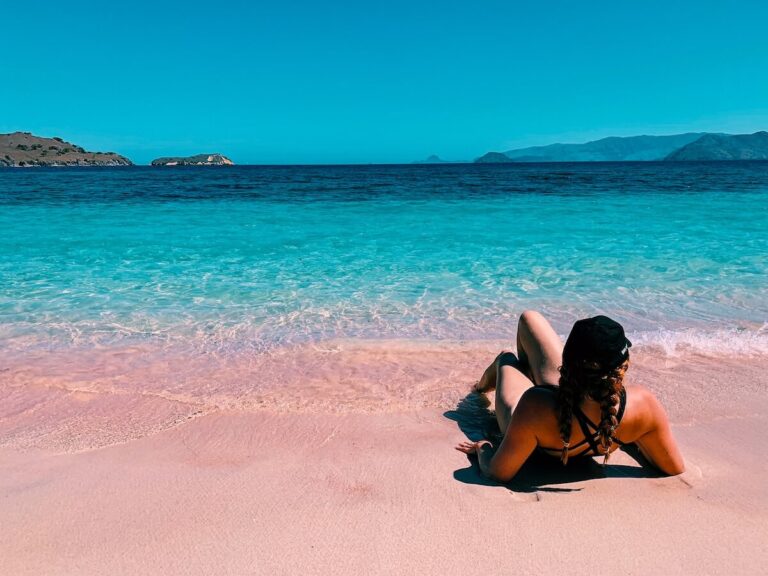
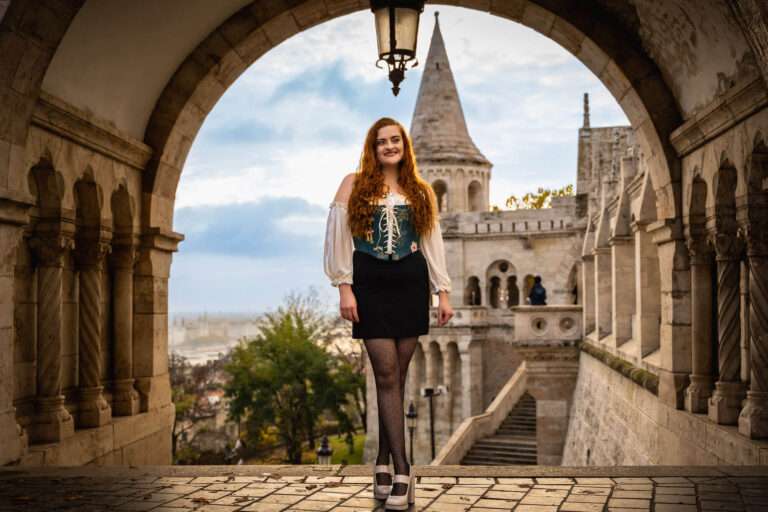
See Some Photos You Like?
Check out my full photography page for a full gallery and prices.

This is a really cool document!