How to Photograph Skijoring: Tips for Capturing the Wildest Winter Sport
This website contains affiliate links from trusted partners. If you purchase through a link on this site, I may earn a commission at no extra cost to you. As an Amazon Associate, I earn from qualifying purchases. See my Privacy Policy and Disclosure for more information.
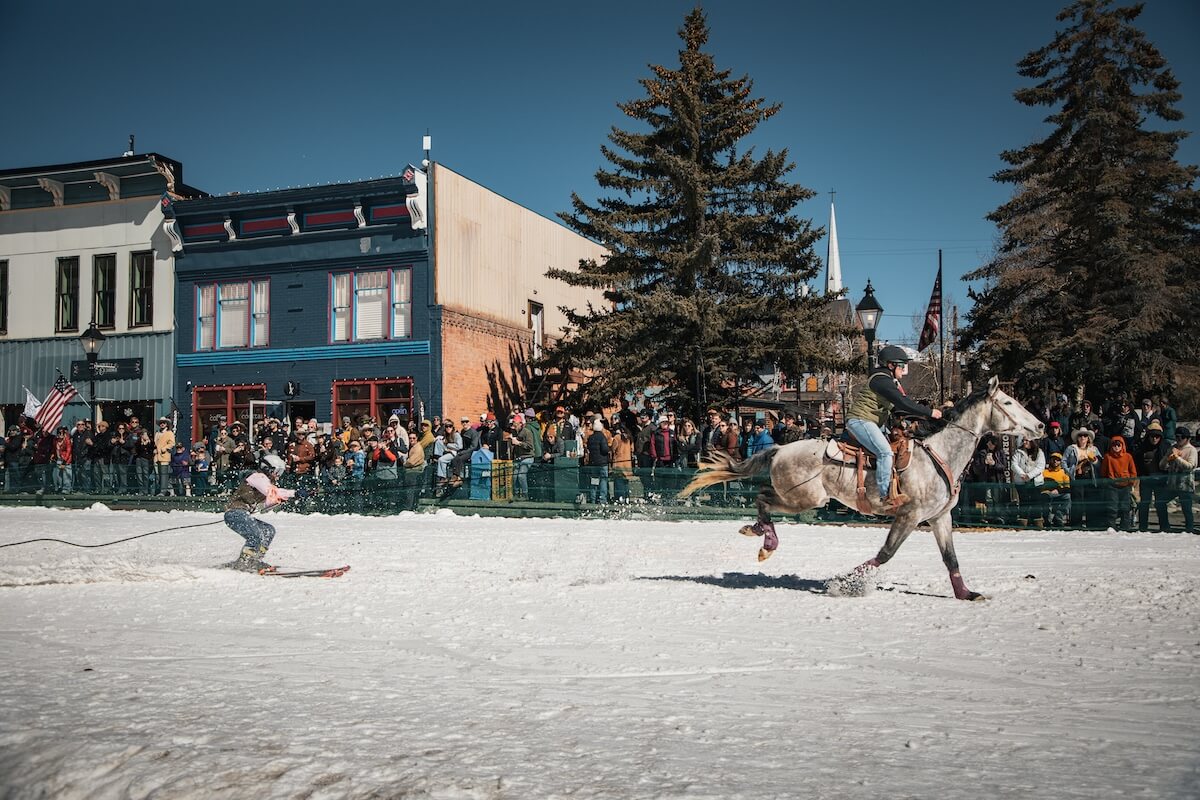
The horse explodes past you in a thunder of hooves. Snow sprays into the air. A skier rockets behind it (rope taut, skis chattering over packed snow) leaning low with a lance aimed at a row of tiny metal rings.
You’ve got maybe two seconds.…two seconds to track the horse…two seconds to lock focus…two seconds before the skier blasts past in a blur of speed, snow, and pure rodeo chaos.
Welcome to skijoring — one of the wildest winter sports you’ll ever try to photograph.
If you’ve never seen it before, imagine a mash-up of rodeo, downhill skiing, and a small amount of glorious insanity.
A horse gallops down a snowy street while towing a skier who launches jumps, spears rings, and somehow keeps it all together at highway speeds.
And if you’re holding a camera? Things get spicy fast.
While traveling around the Colorado mountains, I had the adrenaline filled photoshoot with this niche sport.
In this guide, I’ll show you exactly how to photograph skijoring…from the best spots on the course to stand, to the camera settings that freeze flying snow, galloping horses, and airborne skiers in razor-sharp detail.
Because when everything lines up you’ll walk away with images that feel just as wild as the sport itself.
What Is Skijoring?
Picture this: a galloping horse thundering down a snow-packed street while a skier hangs onto a rope behind it, skis rattling over the course like a caffeinated pinball.
That’s skijoring.
At its core, the sport is simple: one horse, one rider, and one skier being pulled at ridiculous speeds through a course built right down the middle of town filled with cameras and cowboy boots!
But the execution? Pure winter rodeo chaos.
Most courses include a mix of:
- Jumps – where the skier launches into the air behind a full-speed horse
- Ring spearing – grabbing tiny metal rings with a lance while flying past at 30+ mph
- Gates and turns – testing how well the team can handle speed and control
Blink and you’ll miss it. Which is exactly what makes it so much fun to photograph.
Skijoring has roots in Scandinavia, where people were originally pulled on skis behind horses, dogs, or even reindeer for winter travel. But in the American West, the sport evolved into something a little more…dramatic.
Think rodeo meets ski race meets controlled chaos.
Some of the biggest and most photogenic events happen in mountain towns across the West, where snowy main streets turn into temporary racecourses for the weekend. A few legendary spots include:
- Leadville, Colorado – one of the oldest and most famous skijoring competitions (this is where I went!)
- Minturn, Colorado – small town, huge energy, incredible spectator access
- Whitefish, Montana – packed crowds and big mountain vibes
- Red Lodge, Montana – classic Western skijoring with serious airtime
If you’re a photographer, these events are basically a dream playground! But it’s also VERY difficult if you aren’t prepared.
It’s fast. It’s chaotic. And when you catch the perfect frame and it’s pure storytelling gold for an adventure photographer.

Safety First: Where Not to Stand at a Skijoring Event
Alright adventure friend…before you even think about shutter speed, we need to talk about something way more important:
Where you’re standing.
Skijoring is fast. Horses are sprinting. Skiers are flying behind them on a rope. And the whole show is happening on a snow-packed street where things can go sideways in about half a second.
So rule number one? Don’t be the photographer that becomes part of the event.
Here are a few safety rules I always follow when shooting skijoring:
1. Never Stand at the End of the Course
It might look like a great angle, but the finish line is also where things get messy.
Teams are slowing down. Skiers are wobbling. Horses are blowing past the stop zone at full speed.
If something goes wrong, the finish area is exactly where that chaos ends up.
Stay off the exit line and shoot from the sides instead.
2. Watch the Horse Paths
Horses don’t always run perfectly straight. Sometimes they drift, sometimes they spook, and sometimes they decide the course boundary is more of a suggestion than a rule.
Before the race starts, take a minute to watch a few practice runs or early competitors.
You’ll quickly see the natural path the horses tend to follow, and that tells you exactly where not to stand.
3. Stay Behind Barriers
If the event has fencing, hay bales, snow berms, or barricades, so use them.
Those barriers exist for a reason.
They create a buffer between spectators and a horse that weighs half a ton and is moving faster than most people can sprint.
Great photos are awesome. Getting trampled is not.
4. Avoid Jump Landing Zones
Jumps might be the most exciting place to shoot, but they’re also the most unpredictable.
When a skier lands, they’re absorbing a ton of force while still being pulled forward by a galloping horse. If they lose balance, that skier can slide or crash farther than you’d expect.
The safest spot?
Stand off to the side of the jump, not directly in front of the landing area.
You’ll still get the epic airborne shot without putting yourself in the crash zone.
Camera Settings for Skijoring
1. Shutter Speed: Go Fast (Most of the Time)
If there’s one setting you absolutely cannot compromise on, it’s shutter speed.
In fact, if you have to shoot in shutter priority (Tv) to “uncomplicate” things, do it!
Horses are moving fast. Skiers are bouncing over packed snow. And that beautiful snow spray you want to capture? It’s gone in a blink.
Start with: 1/1600 – 1/3200 sec
This freezes:
- flying snow
- horse stride
- airborne skiers
On bright winter days you can easily push toward 1/2500 or 1/3200 without sacrificing exposure.
When in doubt, go faster.
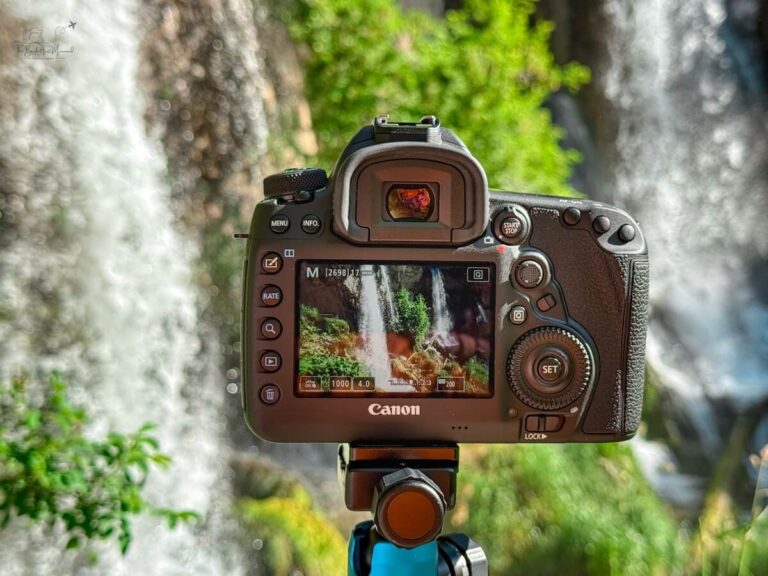
My Go-To Travel Cameras: Canon EOS M50 mark II | Canon EOS 5D mark IV | What’s in My Camera Bag?
Panning for Motion
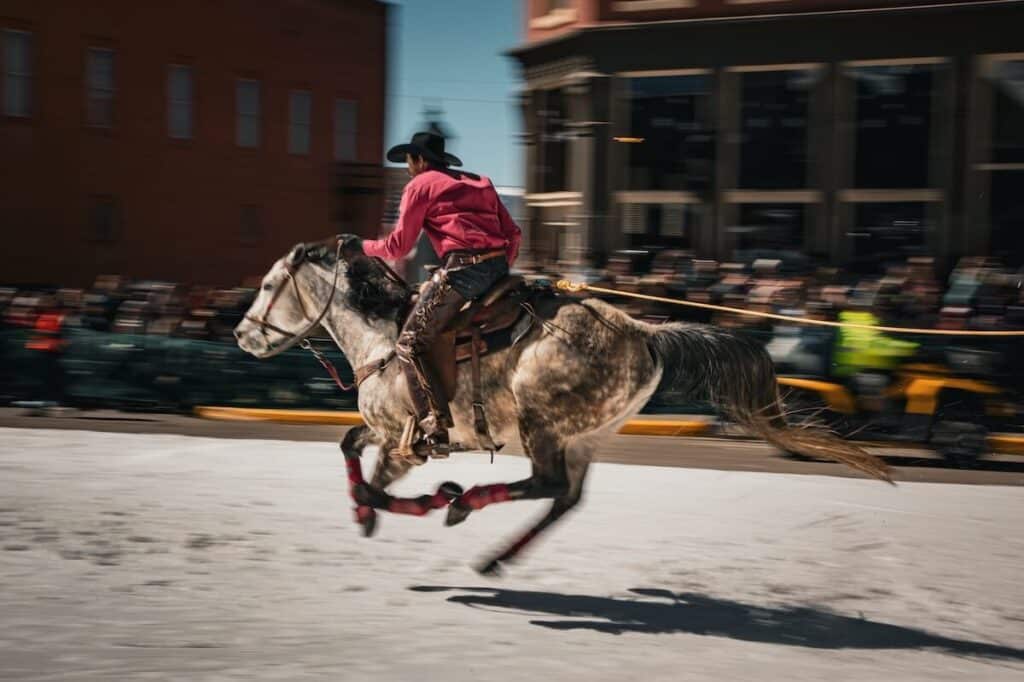
Once you’ve captured a few sharp action shots, try switching things up with panning to show the speed of the sport.
Panning means moving your camera with the subject as it passes, using a slower shutter speed so the background blurs while the horse and skier stay relatively sharp.
Try shutter speeds like: 1/60 – 1/200 sec
Here’s how to do it:
- Track the horse as it approaches
- Start following it smoothly with your camera
- Press the shutter while continuing to move with the action
If you nail it, the horse and skier stay sharp while the background streaks into motion blur creating a shot that feels fast and dynamic instead of frozen in time.
Fair warning: your hit rate will drop. You’ll get plenty of blurry frames while you dial it in. But when it works? The result looks wickedly fast and adds variety to your skijoring photo set.
I tried this and my success rate was super low (lol) and not a single image was totally in focus. Was it still cool? Yep!
Tips for Nailing Focus
This is hands-down the HARDEST thing to do. Did I mention that these horses are bookin’ it? Believe me!
Fast-moving subjects on bright snow can confuse even the best autofocus systems. The trick is setting your camera up so it tracks the action instead of hunting for focus.
Here are a few focusing tips that make a huge difference.
1. Use Continuous Autofocus
First rule of action photography: don’t use single-shot autofocus.
You want your camera constantly adjusting focus as the horse and skier move through the frame.
Set your camera to:
- AI Servo (Canon)
- AF-C / Continuous AF (Nikon & Sony)
2. Use a Small Focus Area
It’s tempting to let the camera pick focus across the entire frame, but in a snowy environment that often means it grabs the bright background instead of the subject.
Aim your focus point directly at the horse’s head or chest, which tends to be the most consistent part of the subject.
3. Pre-Focus on the Action Zone
Skijoring runs follow a predictable path down the course.
Before the next team arrives, pre-focus on the area where you expect the action to happen, like a jump, ring section, or spot along the straightaway.
Then as the team approaches, your autofocus has less work to do, which helps it lock on faster.
4. Track the Horse, Not the Skier
Your instinct might be to focus on the skier because they’re doing the flashy stuff, but the horse is actually the most stable focus target.
The horse is larger, more visible, and easier for autofocus systems to lock onto.
If the horse is sharp, the skier trailing behind will usually fall nicely into focus too.
5. Start Tracking Early
Don’t wait until the team is right in front of you.
Start following the horse several seconds before they reach your shooting spot. This gives your autofocus time to lock on and track smoothly through the action.
Think of it like leading the subject into the shot instead of reacting at the last second.
Pro Tip: Back-Button Focus
Many action photographers swear by back-button focus, which separates focusing from the shutter button.
I used back-button focus for all of the shots you see here.
Using Burst Mode
Skijoring happens fast…really fast. A skier grabs a ring, launches a jump, or sends snow flying, and the whole moment is over in a split second.
That’s why burst mode is essential.
Set your camera to Continuous High / High-Speed Burst Mode so it captures a rapid sequence of images while you hold the shutter. Many cameras shoot anywhere from 8–20+ frames per second, dramatically increasing your chances of catching the perfect moment.
Note that this makes culling a PAIN, but it’s all worth it in the end!
Best Positions to Shoot Skijoring
If you want those jaw-dropping skijoring shots, where you stand matters just as much as your camera settings.
And here’s the truth most people learn the hard way:
The best spots fill up fast, especially in Leadville.
Photographers who know the sport show up early, claim their angle, and get creative with positioning. If you stroll up five minutes before the race starts, chances are you’ll be shooting over someone’s head.
So arrive early, walk the course, and start scouting. Look for clean backgrounds, interesting angles, and safe places where the action comes straight toward you or across your frame.
Here are some of the best spots to look for.
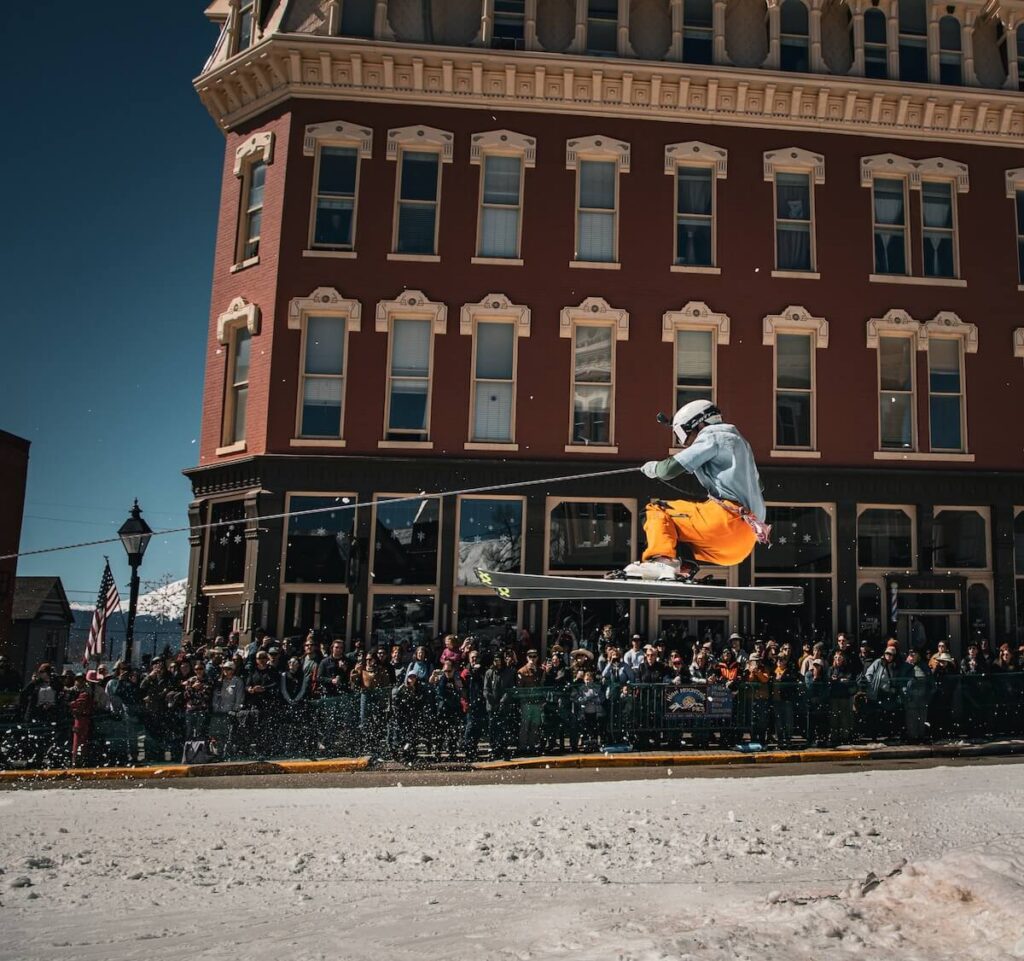
1. The Jump — Big Airtime Drama
If the course has jumps, this is one of the most exciting places to shoot.
As the horse charges forward, the skier launches into the air behind them while still holding the tow rope.
From a photography standpoint, jumps give you:
- airborne skiers
- dramatic body positioning
- snow spraying on landing
- huge storytelling moments
Stand slightly off to the side of the jump rather than directly in front of the landing zone. You’ll still get the airborne shot, but from a safer angle.
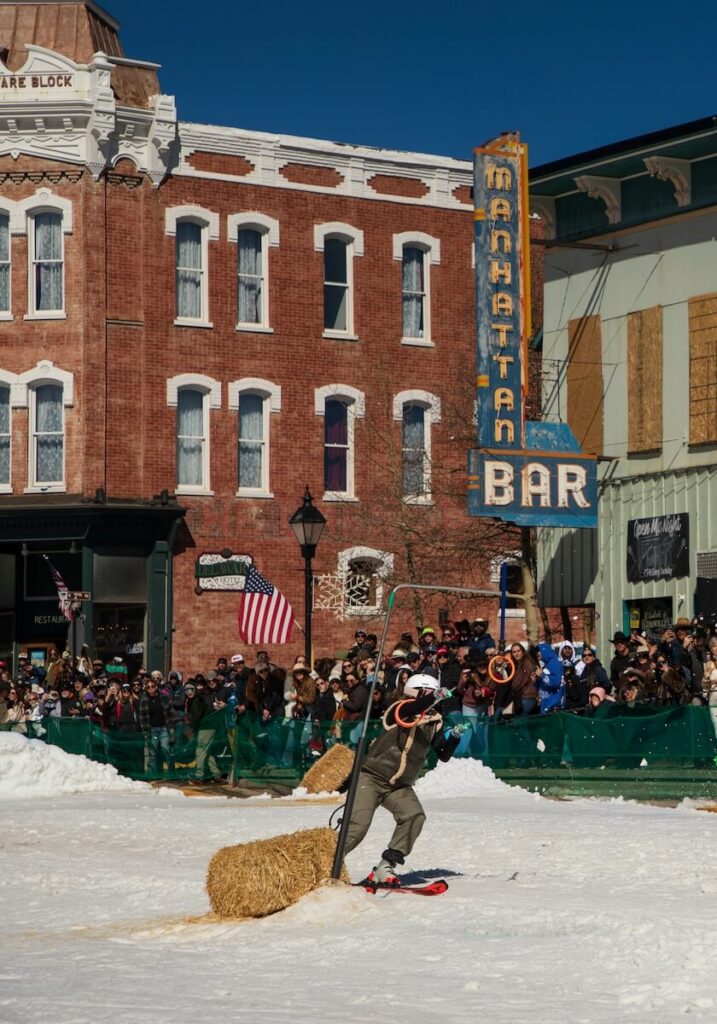
2. The Ring Spearing Section — Pure Storytelling
This is where the skier tries to snag tiny metal rings with a lance while flying past at full speed.
It’s chaotic. It’s technical. And it’s incredibly fun to photograph.
Great moments to capture here include:
- the skier leaning low with the spear extended
- the instant they snag a ring
- missed attempts (which honestly make great photos too)
This section tells the story of the sport, not just the speed.
3. The Finish Line — Snow Spray Chaos
The finish line can produce some of the most dramatic images of the entire race.
Teams blast through the final stretch and then start slowing down, which often means:
- snow spraying everywhere
- big reactions from skiers
- horses digging into the snow to stop
Position yourself off to the side of the finish, not directly in the exit lane, and you can capture some seriously dynamic frames.
4. Side Angles — Perfect for Speed Blur
Sometimes the best shot isn’t head-on.
Standing along the side of the course lets you capture motion across the frame, which is ideal for panning shots and dramatic snow spray.
This is where you can experiment with slower shutter speeds to create motion blur in the background while the horse and skier stay sharp.
The result? Photos that actually feel fast.
How to Avoid crowds
Let’s be honest, this is a crowded event! But don’t panic! Here are some tips to help you out:
- Arrive early. Seriously early. The best spots along the course start filling up well before the races begin.
- Walk the entire course first. Don’t just stop at the first opening you see because some of the best angles are farther down the track where the crowds thin out.
- Look for gaps between spectators. Sometimes a small opening between people gives you a perfect shooting lane.
- Shoot low. Kneeling can eliminate heads and shoulders creeping into the bottom of your frame.
- Use a longer lens. A 200–400mm range lets you shoot over or past crowds and isolate the action down the course.
- Find side angles instead of head-on views. The main straightaway gets packed, but side perspectives often have more breathing room.
- Don’t be afraid to move. If the shot isn’t working, reposition between runs.
- Incorporate the crowd. When in doubt, just make it apart of your shot! Embrace the chaos and tell a story!
How to Capture the Energy of Skijoring
Skijoring isn’t a tidy sport.
It’s loud. Fast. Snow flying everywhere. Horses sprinting at full tilt while skiers hang on behind them with a spear and a prayer.
If you want photos that actually capture the spirit of the event, don’t just focus on documenting what’s happening.
Focus on the energy. You’re not just photographing a sport! You’re capturing controlled chaos.
Here are a few elements that bring that energy to life in your photos.
1. Chase the Snow Spray
Snow is one of the best storytelling elements in winter sports and adventure photography.
When horses dig into the course or skiers carve across the snow, powder explodes behind them in dramatic bursts. That spray adds movement, texture, and drama to your frame.
Watch for moments when:
- the horse accelerates out of the start
- the skier lands a jump
- the team hits the brakes after the finish
That flying snow instantly makes the image feel more dynamic.
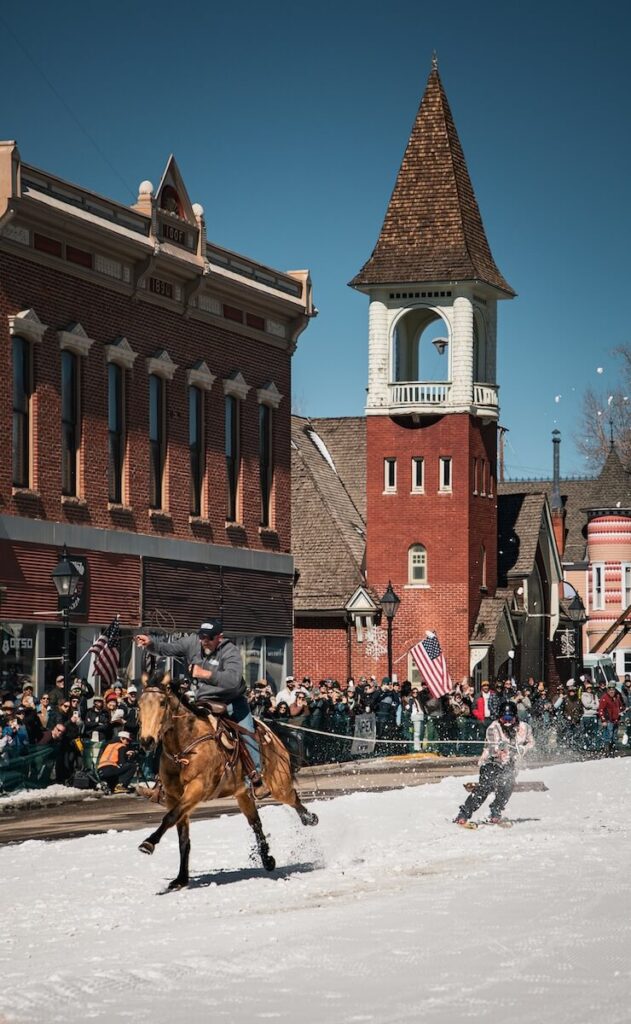
2. Capture the Power of the Horse
The horse is doing a huge amount of the work in skijoring, and some of the most compelling photos highlight that power.
Look for details like:
- muscles flexing through the shoulders
- hooves kicking up snow mid-stride
- the horse leaning forward at full sprint
A frame that captures the horse in a strong stride can feel incredibly powerful, especially when the skier is trailing behind in the background.
3. Watch the Skier’s Body Position
The skier is constantly adjusting balance, leaning into turns, and stretching toward the rings with the spear.
Those body angles tell the story of the moment.
Great moments to watch for include:
- the skier leaning low to grab a ring
- a skier fully extended over a jump
- aggressive carving through the course
The more dynamic the body position, the more energy your photo will have.
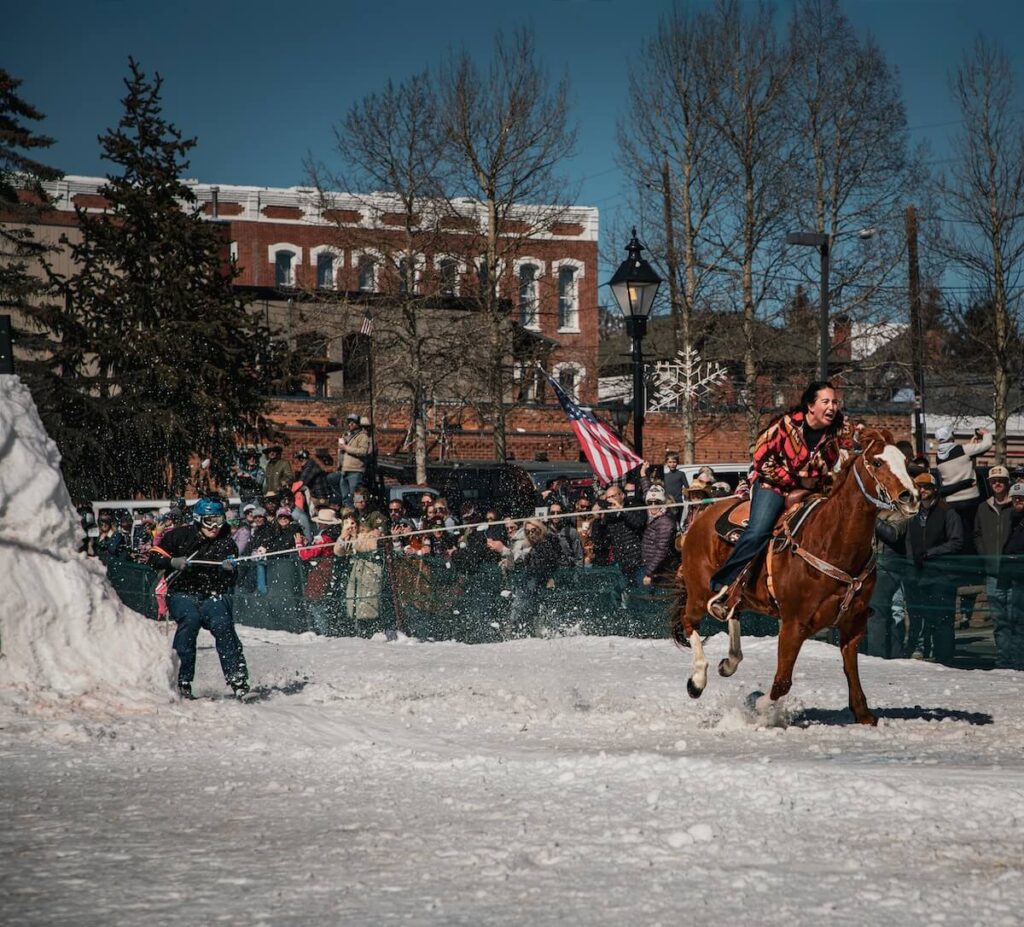
4. Look for Storytelling Frames
Some of the best skijoring photos aren’t just about the action, they show the entire scene.
Try widening your frame occasionally to include:
- cheering crowds lining the course
- colorful mountain-town backdrops
- multiple teams waiting at the start
- snow flying through the sunlight
These wider shots help tell the bigger story of the event.
Editing Tips for Dramatic Skijoring Photos
Winter sports photography doesn’t end when the race is over.
Because here’s the thing about shooting in snow: your camera is constantly trying to turn all that bright white into gray. That means your raw photos often come out a little flat or underexposed straight out of camera.
A few simple editing tweaks can transform those images into something much more dynamic.
Looking for presets? You can grab my adventure bundle and save yourself time!
1. Brighten the Snow
Snow should look bright and clean, not dull or gray.
In Lightroom or your editing software of choice, start by slightly increasing your exposure and whites until the snow feels crisp and luminous.
Just keep an eye on your highlights cause you want bright snow, not blown-out snow.
Also, make sure that it doesn’t get too bright that it distracts from your subject (the horse/skier).
2. Boost Contrast for Snow Spray
Snow spray is one of the most dramatic elements in skijoring photography, and a little extra contrast helps those details pop.
Try increasing:
- Contrast
- Texture
- Clarity
This helps define the individual snow particles flying through the air and adds more impact to action moments like jumps and hard stops.
Want to see me edit in real time? I have an entire YouTube playlist dedicated to this!
3. Add a Little Extra Pop for Action
Action photos benefit from a bit of punch.
After your basic adjustments, try small boosts to:
- Clarity
- Vibrance
- Dehaze
These tweaks help the subject stand out against the snowy background and bring more energy into the frame.
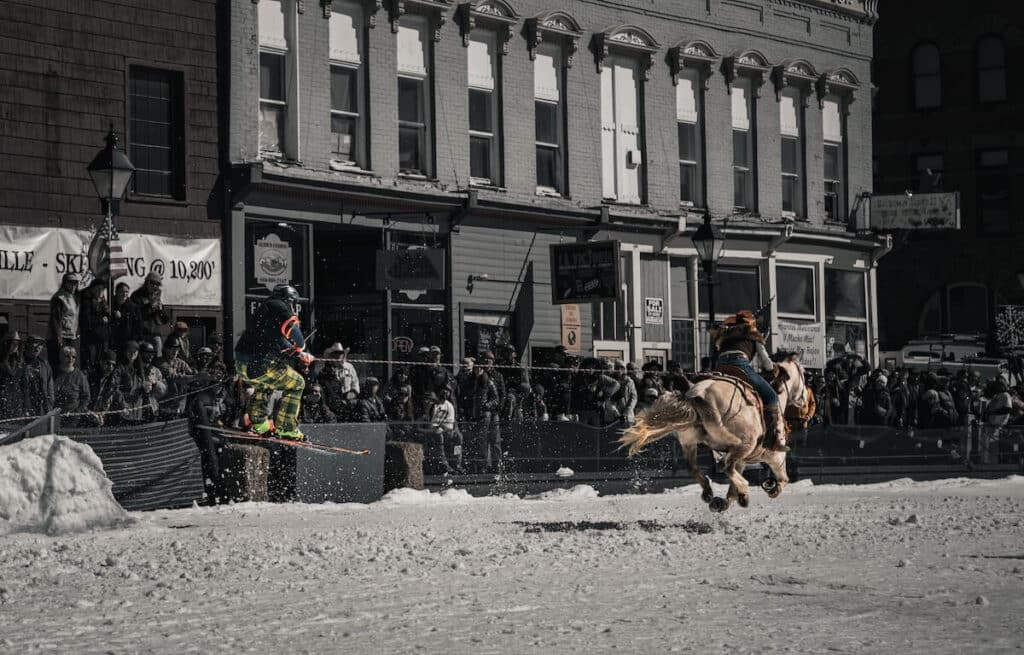
4. Masking
With crowds and so much going on, I found myself isolating the horse/skier from the background with masks.
I would decrease saturation slightly on the background and brighten up the subject to make them POP.
I would then take linear gradients and decrease the exposure of the edges so that the eye naturally goes to the horse and the skier.
Final Thoughts on Photographing the Chaos of Skijoring
If there’s one thing to remember about photographing skijoring, it’s this:
You’re not chasing perfection. You’re chasing moments.
The thunder of hooves hitting packed snow. A skier flying through the air behind a galloping horse. A burst of snow exploding into the sunlight while the crowd roars from the sidelines.
It’s fast. It’s unpredictable. And honestly? That’s what makes it so much fun to photograph.
You’ll miss shots. Everyone does. A skier will grab a ring just as your camera refocuses. A horse will blast past faster than expected. You’ll get home and realize half your burst sequence was slightly off.
But then there will be that one frame.
The horse mid-stride…the skier airborne…and now spraying everywhere like a winter fireworks show.
And suddenly you’ve captured the exact split second where everything came together. That’s the magic of skijoring photography.
So show up early. Walk the course. Claim your spot along the barriers. Dial in your settings before the first horse even enters the gate.
Then keep your eyes up, your camera ready, and your reflexes sharp.
Because when a thousand pounds of horseflesh comes charging down the course with a skier flying behind it…you’ll have about two seconds to catch the shot.
Don’t Stop There!
If you love photographing wild sports, mountain towns, and chaotic outdoor moments like skijoring, come hang out with me in a few other corners of the internet:
- Join my paid newsletter – Shutterbugs Gone Wild
A behind-the-scenes look at selling travel photos, building a photography income stream, and living a wildly adventurous life with a camera. - Subscribe to my free newsletter
Get more travel photography tips, destination guides, and adventure inspiration straight to your inbox. - Become an affiliate
Do you talk nonstop about photography? You might as well get paid for it!
Because honestly? The best stories start when you grab your camera and go chase something a little wild.
More Adventure Photography Inspo
More Adventure Resources
Adventure Bucket List Resources
I am here to help your travel adventures go as smoothly as possible! That way you can check off that bucket list with minimal complications and spending!
SHOP – Shop the best adventure gear and essentials on my Amazon Storefront – handpicked by a full-time adventuring mermaid!
AIRFARE – There are a few I use, but Aviasales is normally my go-to for flights without any extra fees or markups.
ACCOMMODATION – My two favorites are Booking.Com for hotels and VRBO for rentals.
GUIDED TOURS – If you are looking for quick and easy tours, check out GetYourGuide and Viator.
MULTI-DAY TOURS – For more in-depth tours that span several days, TourHub has many great options with reputable travel companies. Use my code (ALEXANDRA1GURU) for up to 5% off your next bucket list adventure.
TRANSPORTATION – You can either rent a car yourself with Discover Cars or do a guided bus tours like Big Bus Tours.
SIM CARDS – Avoid expensive roaming charges with an eSim card with Airalo. Personally, I prefer wifi boxes, and recommend WiFi Candy (get 10% of with the code THEBUCKETLISTMERMAID).
TRAVELER’S INSURANCE – Check out VisitorsCoverage for affordable insurance plans. If you are a nomad or remote worker, I would check out SafetyWing.
SEE MORE – Adventure Resources | Photography Resources
See Some Photos You Like?
Check out my full photography page for a full gallery and prices.