How to Sell Travel Photos Online
This website contains affiliate links from trusted partners. If you purchase through a link on this site, I may earn a commission at no extra cost to you. As an Amazon Associate, I earn from qualifying purchases. See my Privacy Policy and Disclosure for more information.
Every year, thousands of photographers search for how to sell photos online… and most of them get the same generic advice: upload your images to stock websites, cross your fingers, and hope someone buys them for $0.38.
If you’re shooting travel and adventure photography, you’re already sitting on something far more valuable than random stock images.
You have experiences, locations, and moments that people wish they were part of…and that’s exactly what sells.
As a full-time adventure photographer and content creator, I built my business from scratch. I tried, failed, and succeeded at about every method possible for selling my travel photos.
After many fails and sucesses, it is my goal to have you learn from my mistakes so that you can successfully sell your travel photos online!
In this article, we will be discussing the exact ways you can make money online with travel photography, as well as my personal experience with each income stream.
Please note that this is hard work and not the most stable job. I’ve had great months and terrible months. I’ve worked adventurous seasonal jobs just to put food in my belly. None of this is guaranteed to work, but hopefully will help you understand some methods you can use to sell your beautiful work! For more info, see my disclaimer.
Before we begin, I want to hit on two topics that drastically improved my income with online travel photography.
Pretty vs Useful Photos
While building my online photography business, I attempted the obvious routes like uploading to stock sites, posting consistently on social media, and hoping that if I just got good enough, the money would eventually follow. It didn’t.
What I didn’t understand at the time was this:
Pretty photos don’t sell. Useful photos do. Strategic photos do. Story-driven photos do.
Instead of just taking photos of my travels, I started asking:
- Who would actually pay for this image?
- Where does this photo live after I take it and how can I use it to my advantage?
- How can this image lead to something bigger? Like traffic, clients, or income?
That shift is what helped me start turning my photography into real opportunities. And then turned those opportunities into a business.
Through trial and error I’ve built a content ecosystem that turns photos into traffic, traffic into income, and income into more freedom to keep exploring.
Is it easy? NO! Is it fun? Heck, yeah!
Multiple Income streams
Most photographers get stuck because they think there’s only one way to make money from their photos. Let me hold your hand when I say this…there isn’t.
If you rely on a single method, you’ll burn out fast or make pennies. The real shift happens when you start seeing your photos as assets that can create multiple income streams.
So, without further adieu… here are the 5 simplest ways to actually make that happen:
5. Sell Prints and Downloads
Selling prints is one of the most straightforward ways to make money from travel photography because you’re monetizing photos you’ve already taken.
When someone buys a print, they’re rarely buying the photo itself. They’re buying a feeling, a memory, a dream destination, or a moment they wish they could experience themselves.
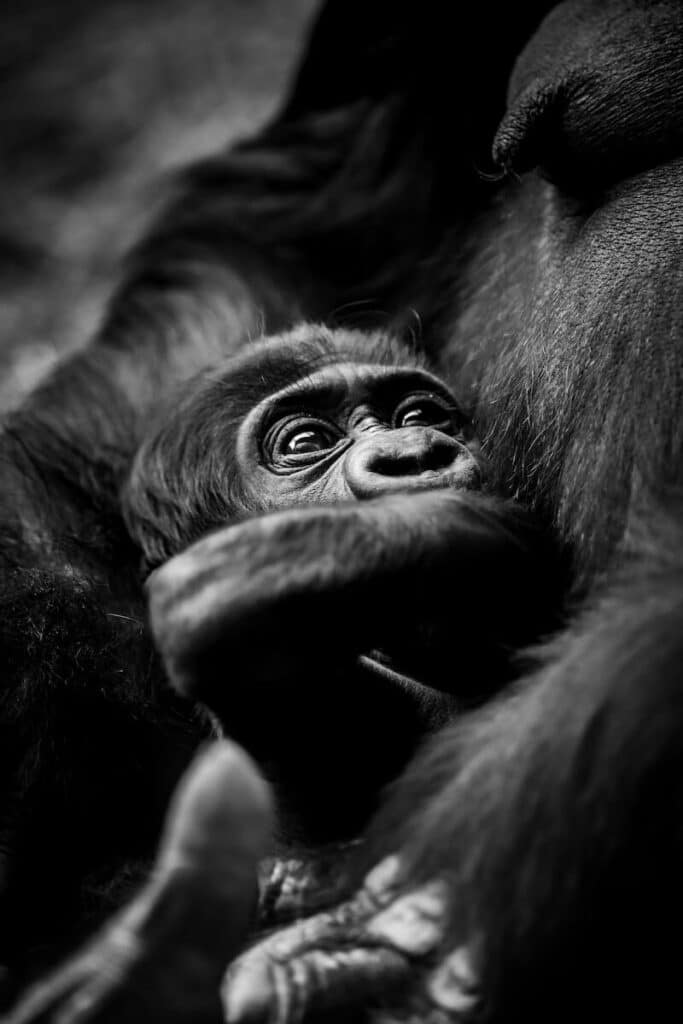
For example, I traveled to a zoo and took a wonderful picture with a giraffe. Cute? Yes…but my close up of a baby silverback gorilla being cradled in his mother’s arms? EPIC!
One thing to keep in mind: travel photography isn’t about you.
Most buyers aren’t interested in seeing a photographer standing in front of a landmark. They’re interested in the destination, the wildlife, the landscape, and the story the image tells.
That’s what separates a travel photograph from a vacation snapshot.
Pricing Your Travel Photography
Pricing is where many photographers get stuck. I see it over and over again in all the photography forums and groups.
The most common mistake is pricing too low because you’re worried nobody will buy.
Unfortunately, cheap prices don’t attract better buyers. They attract people looking for a bargain.
Instead, focus on creating a simple pricing structure that you can adjust over time.
Pricing Prints
Start with your base cost:
- Printing
- Shipping
- Platform fees
Then add a profit margin.
Small prints = lower price point
Large prints = premium price point
Larger prints often feel more valuable to buyers and typically offer better profit margins.
Pricing Digital Downloads
Digital files are easy to deliver and have virtually no fulfillment costs, making them a great option for travel photographers.
Because they are not getting a physical product, cost might potentially be less.
With that being said, digital downloads are less work for you and you sell them in your sleep. Therefore, it is worth the price reduction.
Charge More for Rare Images
Not every photograph should be priced the same.
Consider charging more for:
- Rare wildlife encounters
- Difficult-to-access locations
- Remote destinations
- Seasonal events
- Adventure photography that required significant effort, planning, or risk
- Moments that would be difficult to recreate
The harder a photo was to capture and the more unique the moment, the more value it may have to buyers.
For example, my Duomo photos will be less expensive than my northern lights photo that took me 7 hours of hiking and getting lost to achieve.
How to Decide Which Photos to Sell
One of the biggest surprises for new travel photographers is that their favorite image isn’t always the one that sells.
The photos that tend to perform best are:
- Iconic destinations
- Strong storytelling moments
- Wildlife encounters
- Images with a sense of scale
- Photos that create an emotional reaction
- Images that fit naturally into home or office decor
If you’re just getting started, focus on uploading your strongest 20-50 images rather than every photo you’ve ever taken.
A smaller, highly curated portfolio almost always performs better than a massive gallery full of filler images.
Best Places to Sell Travel Photography
I prefer Fine Art America because it is used internationally and has the greatest quality with a wide variety of products for customers.
Here are some other options:
Each platform has different fees, audiences, and fulfillment options, so it’s worth comparing them before committing to one.
P.S. For reading this article, grab 30% off with the following code: UDJVUE
How to Promote Your Prints
Creating great photos is only half the battle. People need to know they exist.
Some of the most effective ways to promote your work include:
- Sharing the story behind the image
- Showing the editing process
- Featuring prints in blog posts
- Building an email list
- Creating holiday gift guides
- Posting behind-the-scenes content
Most photographers don’t have a photography problem. They have a visibility problem.
This was one of my biggest hurdles when developing my travel photography business. My photographs were easy to shoot! But promoting them felt like hitting my head against a brick wall.
Success is different for everyone, but I found the most luck with word of mouth, storytelling, and my email list.
My Experience Selling Prints
Although I don’t rely on selling prints as my only income, I do love selling them because I genuinely love my photographs.
Especially now that I’m adventure guiding in Alaska and guests often want to buy photos that I took on their tour.
4. License Your Photos
While prints are sold directly to consumers, licensing is usually how photographers get paid by businesses.
Instead of selling a physical print, you’re granting permission for someone to use your image for a specific purpose.
In other words, you’re not selling the photo itself. You’re selling the usage rights.
Who Buys Licensed Travel Photography?
Many photographers assume only magazines buy photos.
In reality, potential buyers include:
- Tourism boards
- Hotels and resorts
- Tour companies
- Outdoor brands
- Travel publications
- Marketing agencies
- Local businesses
- Destination websites
A big one I’ve seen over and over again looking for work is tourist boards. They sometimes even organize FAM (familiarization trips) for influencers and content creators.
To do this, contact the board directly before you travel to the destination.
How Licensing Differs From Stock Photography
Many photographers start by uploading images to stock photography websites.
There’s nothing wrong with that, but stock photography and direct licensing are very different.
With stock photography:
- You upload your photos and wait for buyers
- Pricing is largely controlled by the platform
- Payouts are often small
- You’re competing against millions of images
With direct licensing:
- You negotiate directly with the client
- You control pricing
- You control usage rights
- One image can generate significantly more revenue
Think of stock photography as volume and direct licensing as relationships.
How to Find Licensing Clients
One of the biggest misconceptions about licensing is that clients magically find you.
Sometimes they do, but most of the time, they don’t.
Potential places to find clients include:
- Tourism board websites
- Travel publications
- Destination marketing organizations
- Hotels and resorts
- Outdoor brands
- Local tourism campaigns
- Businesses featured in your photos
When you’re photographing a destination, pay attention to the organizations already promoting that area. Those are often the same groups that need photography.
I also stay active on social media for any brand opportunities or PR.
One caveat: If a brand is directly advertising that they need a photographer, competition will be fierce. Because of this, I often seek brands that isn’t necessarily looking for photographers, but could use one.
I then pitch my services, pointing out how much more money they could be making with more professional photographs promoting their services.
How to Pitch Your Travel Photography
When reaching out to potential clients, keep it simple and professional.
Focus on the destination or subject you photograph, why your images are relevant to their audience, how they might use the images, and a link to a curated gallery if needed.
Focus all on how you can help THEM, not the other way around.
If you are struggling, focus on their pain points and why they need your photos. Think…why should they even bother hiring you? It’s harsh, but it’s true.
Avoid sending massive galleries or dozens of attachments and make it easy for someone to quickly understand the value of your work.
My pitches often leave clients wanting more and focusing all on them.
How to Negotiate Licensing Fees
Pricing varies widely depending on:
- How the image will be used
- How long it will be used
- Where it will appear
- Whether usage is exclusive or non-exclusive
A tourism board using an image in a regional social media campaign is very different from a national advertising campaign.
The more usage rights a client receives, the more valuable the license becomes.
Personal vs. Commercial Use
One of the biggest mistakes I see photographers/creators/influencers making is leaving money on the table when it comes to pricing differently for commercial use.
Commercial use and personal use pricing is not the same.
Personal Use
Examples include:
- Phone wallpapers
- Personal prints
- Home decor
- Personal projects
These are typically your lowest-priced options.
Commercial Use
Examples include:
- Blogs
- Tourism websites
- Marketing campaigns
- Advertisements
- Brand partnerships
- Social media promotions
In other words, if a business wants to use your image to help generate revenue, that image is worth significantly more than a personal-use download.
Commercial licensing can often be worth hundreds or even thousands of dollars depending on the usage rights involved.
My Experience With Licensing
Personally, I burned out on pitching pretty quickly.
That said, I’ve met photographers who have built entire businesses around licensing and upselling their work.
One thing I’ve consistently noticed is that photos with people, storytelling, and a strong sense of place tend to perform better than generic landscapes.
Brands aren’t just buying a mountain. They’re buying the experience of being there.
3. Work With Brands (UGC + Campaigns)
Unlike selling prints or licensing a single image, brand partnerships often involve creating an entire collection of content that a company can use across multiple marketing channels.
That might include:
- Photography
- Video content
- Social media assets
- Website imagery
- Advertisements
- User-generated content (UGC)
In other words, brands aren’t just buying photos. They’re investing in content that helps them market their products, services, or destinations.
What Is UGC?
UGC stands for User Generated Content.
Despite the name, brands often pay creators and photographers to produce UGC because it feels more authentic than traditional advertising.
The goal isn’t to create a polished magazine ad, but to create content that feels genuine, relatable, and trustworthy.
For travel photographers, this can be a huge opportunity because you’re already creating the type of content brands want.
Types of Brands That Hire Travel Photographers
Potential travel clients include:
- Outdoor gear companies
- Tourism boards
- Hotels and resorts
- RV and camping brands
- Tour operators
- Travel apps
- Adventure experience companies
- Photography brands
If your audience enjoys travel, adventure, hiking, camping, photography, or outdoor recreation, there are likely brands actively looking for content in your niche.
I tend to only go for brands where I, myself, am the client. Basically, I buy a crap ton of outdoor gear. I am one of their buyers. Therefore, I would be a perfect person to create UGC for that brand because it’s authentic and I know how to relate to more buyers like me.
Why Brands Pay for Travel Photography
Many photographers assume brands are simply buying a photo when most of the time, they’re buying a marketing asset.
A single image or video might be used on:
- A website homepage
- Social media posts
- Email campaigns
- Advertisements
- Product pages
- Tourism guides
That’s why brand work often pays significantly more than a single print sale.
How to Build a UGC Portfolio
The good news is you don’t need paid brand deals to build a portfolio. Start by creating the type of content brands already use.
The goal is to show potential clients what you can create, not who you’ve worked with. However, if you have worked with brands previously, show it off (with permission, of course).
When I was first getting into adventure product photography, I simply took outdoor and adventure items and photographed them in an authentic travel settings in order to practice.
How to Find Brand Opportunities
One of the biggest mistakes photographers make is waiting for brands to find them.
While inbound opportunities do happen, most photographers get their first partnerships through proactive outreach.
Places to look include:
- Brand websites
- Affiliate programs
- Tourism boards
- Creator programs
- Industry events
- Networking groups
- Social media
I also pay attention to brands that are already working with creators because it means that they are open to collaborations and potential partnerships.
Also, pay attention to the brands you’re already using. Those are often the easiest partnerships to pitch because you already understand the product.
How to Pitch Brands
Keep your outreach short and focused.
Introduce yourself, explain why you’re a good fit, and show examples of relevant work.
Avoid sending massive portfolios. Instead, send a curated selection of content that directly relates to the brand you’re contacting.
For example, if you’re pitching a hiking brand, lead with hiking content.
If you’re pitching a tourism board, lead with destination photography.
The key is making it easy for someone to immediately see the value you can provide.
Also, I build a relationship before I pitch. Maybe I’ll interact on social media or ask questions. Then, when it is time to send the email, it isn’t a cold pitch.
Create a Media Kit
A media kit is essentially a resume for your photography business.
At a minimum, include:
- A short bio
- Your audience demographics
- Social media statistics
- Website traffic
- Previous partnerships
- Services offered
- Contact information
Keep it clean, professional, and easy to skim.
The goal is to help a potential client quickly understand who you are and how you can help them.
I avoid mentioning prices until I’ve built a relationship with the client and chatted back and forth for a while.
I always keep my media kit accessible on my Link Tree for brands to see.
There was a killer media kit workshop on Travel Blog Prosperity where I actually got my media kit audited in real time! This helped a TON!
Upselling Brand Partnerships
Don’t assume a project ends with a single deliverable.
If a brand is interested in one photo, they may also need additional images, video content, social media assets, blog photography, or expanded usage rights.
Expanded usage rights are the most slept on income stream for photographers!
Many successful photographers increase their income by selling complete content packages rather than individual files.
My Experience Working With Brands & UGC Contracts
Personally, this is one of my favorite ways to make money from photography and the source of most of my photography income.
I enjoy it because it allows me to combine photography, travel, storytelling, and marketing into a single project.
That said, brand partnerships don’t magically appear.
I had some rejection sensitivity and this was brutal when I was first starting (I would get “no’s” all day long).
A large part of the process is networking, building relationships, creating consistent content, and staying visible.
The good news is that one successful partnership can often lead to repeat work, referrals, and long-term relationships.
2. Sell Through Your Website
If social media disappeared tomorrow, would people still be able to find your work?
That’s why every photographer needs a home base.
Your website is the one platform you truly own. It gives you complete control over your portfolio, pricing, branding, and customer experience.
More importantly, it gives potential buyers a place to take action.
Think of it as the headquarters of your photography business.
How to Use Your Website to Sell Photography
One of the biggest mistakes photographers make is treating their website like a storage unit.
Some things you can have on your website might include:
- Purchasing prints
- Downloading digital products
- Joining your email list
- Contacting you about licensing
- Inquiring about brand partnerships
Every page should answer the question:
“What do I want this visitor to do next?”
A successful photography website should guide visitors toward a specific action.
Think of every visitor as a potential visitor as a potential buyer. And they need to be lead from a visitor to a buyer.
Create Galleries That Make Sense
A well-organized gallery creates a better experience for potential buyers.
Instead of uploading everything into one giant collection, organize your work into categories.
The easier your photos are to browse, the easier they are to buy.
Make Your Website Look Professional
Fortunately, you don’t need a fancy custom website to look professional.
Focus on the basics:
- Clean navigation
- High-quality images
- Consistent branding
- Fast loading speeds (I use Google Speed Insights and Debug Bear)
- Mobile-friendly design
- Clear calls to action
Basically if a 10 year old can’t figure it out, it’s too complicated. Avoid clutter and let your photography do the talking.
Why I Use SmugMug
Personally, I use SmugMug as a major part of my photography business.
SmugMug allows me to create professional galleries, sell prints directly, deliver client photos securely, store my image library, and manage everything in one place.
One feature I especially appreciate is the unlimited photo storage, which is incredibly valuable when you’re constantly creating content and traveling.
For me, it functions as a portfolio, storefront, client delivery system, and image archive all in one place.
Features to Look For in a Photography Website Platform
Whether you choose SmugMug or another platform, look for features such as:
- Online print sales
- Digital download delivery
- Private client galleries
- Password protection
- Custom branding
- Mobile optimization
- SEO capabilities
- Secure image delivery
The right platform should make it easier to run your business, not create more work.
My Experience with Creating My Own Website
I use SmugMug all the time to send galleries to clients and have them purchase photos. It is a must-use tool for all travelers looking to sell their photos online. You can see my profile for inspiration.
1. Use Your Photos to Sell Products
Instead of selling the photo itself, you’re using your photography to sell something else. In many cases, this can be more profitable and scalable than selling prints alone.
Why? Because a single image can only be sold so many times.
A digital product can be sold over and over again without additional work.
What Types of Products Can Travel Photographers Sell?
Your photos can become the foundation for all kinds of products.
Some examples include:
- Lightroom presets
- Editing guides
- Photography cheat sheets
- Travel photography ebooks
- Destination guides
- Scavenger hunts
- Workshops
- Online courses
- Membership communities
- Printables
- Digital downloads
The key is to ask: What problem does my photography help solve?
People aren’t usually buying a preset because they want a preset. They’re buying it because they want their photos to look better.
They’re not buying a travel guide because they want a PDF. They’re buying it because they want a better adventure.
How to Find Product Ideas
One of the easiest ways to discover product ideas is to pay attention to the questions people already ask you.
If you aren’t getting any questions, look on photography and travel groups and forums and notice what questions are getting asked over and over again.
Every repeated question is a potential product.
Your experiences, mistakes, workflows, and lessons learned can all become products.
The goal isn’t to teach everything, but just to solve a specific problem in a clear and concise way.
My Experience with Products
I love this method and I’m actually quite proud of the products I’ve created.
I’ve even wrote entire e-book just on adventure editing!
It allows me to combine photography, travel, teaching, and creativity into one business.
Over the years, I’ve sold:
I’ve also built a community called Shutterbugs Gone Wild, where photographers can learn about adventure, photography, and how to live more adventurously through the business side of both.
What I love most is that the photo becomes the starting point instead of the final product.
A single image can inspire a guide, a lesson, a preset, a workshop, or an entire product ecosystem.

Tools I Use to Create and Sell Digital Products
The good news is that you don’t need complicated software to get started. Trust me… I’m no graphic designer.
Some of the tools I use include:
Canva
This is how I make my products, e-books, templates, checklists, etc.
I use Canva all day long!
Gumroad
This is where I store my products and sell them.
I chose Gumroad because it is easy to understand and also allowed me to create an affiliate program for my products.
Bonus: Become a Photography Affiliate
Affiliate marketing is one of the simplest ways to make money from your travel photography.
Instead of selling your photos directly, you’re recommending the gear, tools, and resources that help you create them.
When someone purchases through your affiliate link, you earn a commission at no additional cost to them.
How Affiliate Marketing Works
The process is simple:
- Join an affiliate program
- Share products you genuinely use and recommend
- Someone clicks your link
- They make a purchase
- You earn a commission
The best part? You don’t need to create a product, manage inventory, or handle customer support.
What Can Travel Photographers Recommend?
Think about the tools you already use every day: Cameras, tripods, drones, editing software, courses, travel gear, and more!
If it helps you create better photos or adventures, there’s a good chance it has an affiliate program.
Focus on Helping, Not Selling
This is where many photographers get affiliate marketing wrong.
They focus on pushing products. Instead, focus on helping people solve problems.
However, with affiliate marketing, people aren’t just buying a product. They’re buying confidence that the product will help them achieve a similar result.
This is why trust is critical!
Where Affiliate Marketing Fits Naturally
Affiliate marketing works best when it’s integrated into content you’re already creating.
Instead of creating content to sell products, create content that helps people and naturally mention the tools you use along the way.
For me, I naturally weave affiliates into blog posts and YouTube videos the most.
How to Join Affiliate Programs
Most affiliate programs are free to join and most include an application process.
Some are hosted through platforms such as Travelpayouts, CJ, or Awin.
Out of all of them, Travelpayouts is by far my favorite!
The application process usually involves:
- Creating an account
- Providing your website or social media channels
- Waiting for approval
- Generating custom affiliate links
Some companies approve creators instantly, while others manually review applications.
Best Affiliate Programs for Travel Photographers
Some of the most popular options include:
- Amazon Associates
- B&H Photo
- Adorama
- Skylum
- Adobe
- SmugMug
- Travel insurance companies
- Outdoor gear brands
- Camera accessory companies
My Experience With Affiliate Marketing
Affiliate income has become one of my favorite revenue streams because it naturally fits into the content I’m already creating.
When I publish a destination guide, photography tutorial, gear review, or YouTube video, I’m already talking about the products I use.
Adding affiliate links simply allows me to earn a commission when readers decide those tools are a good fit for them too.
I’ve found that recommending products I genuinely use performs far better than chasing the highest commission rates.
A Word of Caution
Never recommend a product solely because it pays a commission.
Your audience trusts your recommendations, so protecting that trust is worth far more than any single affiliate sale.
Final Thoughts: Build a Life That Funds Your Adventure
Selling your photos online isn’t really about the photos. It’s about what those photos make possible.
Because at the end of the day, the goal isn’t just to make a few extra dollars from your camera… it’s to build a life that actually supports the way you want to live.
And that doesn’t happen by accident.
It happens when you:
- treat your photos like assets
- create systems that work for you
- and stop relying on one-off opportunities
You don’t need to have everything figured out right now.
You just need to start thinking differently about the photos you’re already taking.
💡 If you want to go deeper…
This is exactly what I talk about inside Shutterbugs Gone Wild. This is my paid newsletter and community for photographers who want to turn their creativity into something adventurously sustainable.
We get into:
- real income strategies (beyond surface-level advice)
- building a photography-based lifestyle without burnout
- finding opportunities, clients, and creative paths
- and designing a life that’s actually worth photographing
More Travel PHotography Inspiration
The 5 Types of Adventure Photographers and Creators
Canon EOS 5D Mark IV Review (2026): Is This DSLR Still Worth It?
Best Travel Photography Backpacks for Every Budget & Adventure
The Most Photogenic Destinations in the World (According to a Travel Photographer)
More Adventure Travel Resources
Adventure Bucket List Resources
I am here to help your travel adventures go as smoothly as possible! That way you can check off that bucket list with minimal complications and spending!
SHOP – Shop the best adventure gear and essentials on my Amazon Storefront – handpicked by a full-time adventuring mermaid!
AIRFARE – There are a few I use, but Aviasales is normally my go-to for flights without any extra fees or markups.
ACCOMMODATION – My two favorites are Booking.Com for hotels and VRBO for rentals.
GUIDED TOURS – If you are looking for quick and easy tours, check out GetYourGuide and Viator.
MULTI-DAY TOURS – For more in-depth tours that span several days, TourHub has many great options with reputable travel companies. Use my code (ALEXANDRA1GURU) for up to 5% off your next bucket list adventure.
TRANSPORTATION – You can either rent a car yourself with Discover Cars or do a guided bus tours like Big Bus Tours.
SIM CARDS – Avoid expensive roaming charges with an eSim card with Airalo. Personally, I prefer wifi boxes, and recommend WiFi Candy (get 10% of with the code THEBUCKETLISTMERMAID).
TRAVELER’S INSURANCE – Check out VisitorsCoverage for affordable insurance plans. If you are a nomad or remote worker, I would check out SafetyWing.
SEE MORE – Adventure Resources | Photography Resources
See Some Photos You Like?
Check out my full photography page for a full gallery and prices.