How to Avoid Burnout in Travel Photography and Actually Enjoy the Moment
This website contains affiliate links from trusted partners. If you purchase through a link on this site, I may earn a commission at no extra cost to you. As an Amazon Associate, I earn from qualifying purchases. See my Privacy Policy and Disclosure for more information.
Travel photography usually starts as a dream.
You imagine golden light, quiet moments in new places, and the feeling of being fully there with your camera in hand and heart wide open.
But somewhere along the way, the reality can feel different.
Instead of experiencing the place you’re in, you’re thinking about coverage:
- What angles you still need.
- Whether this moment will work for a post.
- If you’ve documented enough to justify the trip.
- The camera doesn’t feel heavy, exactly… but the pressure does.
If you’re searching for ways to avoid burnout in travel photography, it might not be because you’re shooting too much. It might be because every experience has quietly turned into content.
This shift happens slowly. Not in a dramatic, “I hate travel and photography” way, but in small moments where you’re present and planning at the same time.
It’s where travel feels productive, but not fully lived. Where photography starts to feel less like a companion and more like a responsibility.
In this article, I’m going to be getting vulnerable (which is extremely hard for me). I’ve actively dealt with burnout in my own photography and I want to help so that it doesn’t happen to you.
What Burnout in Travel Photography Actually Looks Like
Burnout in travel photography doesn’t always show up as exhaustion or frustration. More often, it feels quieter than that. Like a dulling of something that used to matter deeply.
You still love travel. You still care about photography. But the camera starts to feel heavier than it should.
For me, burnout didn’t arrive as a breaking point. It crept in while I was doing everything “right.”
I was traveling to bucket-list destinations, chasing beautiful light, and creating constantly, yet I never felt like it was enough. No matter where I was, part of me felt behind.
How Burnout Shows UP
It shows up in small, familiar ways:
- Shooting “just in case” because you’re afraid of missing something
- Taking far more photos than you need, without a clear intention
- Feeling pressure to prove the trip was worthwhile through content
- Sitting down to edit and realizing you have hundreds of images that all feel… the same
- Focusing more on the competition to stand out in the industry instead of the true purpose of capturing adventure.
- Constantly comparing yourself to other photographers and feeling imposter syndrome or “my work will never be that good”
At my worst, I wasn’t just tired. I was numb and was standing in places I had dreamed about for years, yet spending more time worrying about coverage than actually being there.
I was checking off bucket-list locations while quietly wasting the experience itself.
Burnout, I’ve learned, isn’t always about doing too much. It’s about overdoing everything. Over-planning, over-shooting, over-editing, and constantly feeling like you need more proof that you’re good enough.
And when photography becomes a measure of self-worth instead of a way to experience the world, even the most beautiful places can start to feel empty.
Why Travel Photographers Burn Out Faster Than Other Creatives
Travel photography is uniquely demanding in a way most creative work isn’t because it rarely has an off switch.
When you travel for photography, you’re not just creating during set hours. You’re creating all the time. Sunrise, sunset, in between, and sometimes even in moments that were meant to be personal or restorative.
The camera is always there, and with it comes the quiet question: Should I be shooting this?
Unlike studio work or scheduled shoots, travel doesn’t pause. Every walk, meal, hike, overlook, and fleeting moment of light feels potentially monetizable.
This isn’t because you’re greedy or chasing numbers, but because travel is expensive, time-limited, and often deeply tied to your creative identity. There’s an unspoken pressure to justify the trip through content.
That pressure compounds when you realize you’re not the only one standing in that place.
Travel photographers are constantly creating in shared spaces. They share the same overlooks, the same landmarks, the same iconic trails.
You see images online that look just like the scene in front of you, taken by someone else, maybe with better light, better timing, or a bigger audience. Even while traveling, comparison sneaks in.
And suddenly, it’s not just about capturing the moment. It’s about capturing it better. Or differently. Or in a way that proves your version mattered.
This combination (nonstop creation, perceived monetization pressure, and constant comparison) is what accelerates burnout in travel photography.
It’s not because you don’t love travel, but because the experience itself becomes inseparable from performance.
When every experience becomes content, nothing feels fully lived.
The Content Trap (When You Stop Experiencing and Start Producing)
The shift into the content trap doesn’t happen all at once.
There’s no moment where you decide to stop experiencing travel and start producing it. It happens gradually, almost invisibly.
At first, you’re just being prepared. You shoot a little extra, just in case. You think ahead about how the images might fit together later. You tell yourself you’ll enjoy the moment after you get the shot.
But over time, something changes.
Instead of photographing what moves you, you start photographing what covers the experience.
Wide shots, details, variations. It’s not because they matter to you, but because they might be useful. You’re no longer shooting for connection. You’re shooting for completeness.
You start chasing “shots” instead of moments. Not the feeling of being there, but the proof that you were.
Travel becomes a mental checklist.
- This would make a good post.
- That could work for a reel.
- This angle might perform better.
Even when you’re present, part of your attention is already elsewhere arranging the memory before it’s fully lived.
And the hardest part? It becomes difficult to put the camera down at all. Not because you want to keep shooting, but because it feels risky to stop.
As if the moment only counts if it’s captured. As if resting from creating means falling behind.
This is the content trap. Not a lack of passion, but a quiet shift in purpose. This is where I noticed photography stops being a way to experience the world and starts becoming a way to produce evidence of it.
And when that happens, burnout doesn’t come from doing too much. It comes from never fully being where you are.
Experience-First Travel Photography (And Why It Prevents Burnout)
The way out of burnout in travel photography isn’t to stop traveling or stop shooting. It’s to change the role photography plays while you’re there.
Experience-first travel photography reframes the camera as an extension of the moment and not the reason for it.
Instead of arriving somewhere already thinking about output, you arrive with curiosity. You let the place lead, and you respond when something actually pulls at your attention.
This approach comes with a quiet but powerful realization: not every moment needs proof.
Some moments are allowed to exist only in your body and memory. They don’t need a frame, a caption, or an audience to be meaningful.
And when you give yourself permission to let moments pass un-captured, the ones you do photograph start to matter more.
Fewer photos doesn’t mean less success. In fact, it often leads to the opposite. When you’re not shooting everything, you’re more selective. More present.
You notice light instead of chasing it. You recognize emotion instead of manufacturing it.
Presence changes how you see and how you shoot.
When photography supports the experience instead of competing with it, burnout loosens its grip.
- Editing becomes simpler because the images are intentional.
- Shooting feels lighter because it’s connected to something real.
- And travel starts to feel like travel again… not a performance, not a production, but a lived experience you happened to document.
The Burnout Paradox
That’s the paradox of avoiding burnout in travel photography: when you stop trying to capture everything, you finally start creating images that actually mean something.
If you’re realizing that burnout has less to do with how much you’re creating and more to do with why you’re creating, this is where reflection matters.
Reconnect with Your Why
One of the most helpful tools in my own burnout recovery has been returning to my “why”.
This is not in a motivational quote way, but in a quiet, honest one.
I created a simple Why Journal to help travel photographers reconnect with what originally pulled them toward photography, without pressure to produce or perform.
This did WONDERS for my burnout journey and was the turning point in my healing. It also helped me develop my style as a photographer and stop trying to please everyone.
How to Not Burnout in Travel Photography
Avoiding burnout in travel photography doesn’t require a dramatic reset or walking away from the camera.
Often, it’s the result of small shifts. They are shifts that reduce pressure, decision fatigue, and the feeling that you’re always behind.
Shoot Less, But With More Intention
Burnout thrives in excess. Excess options. Excess files. Excess decisions.
One of the most effective ways to reduce overwhelm is to pre-decide what matters before you ever raise the camera.
Instead of trying to capture everything, ask yourself a simple question: What about this place or moment actually moves me?
When you shoot with intention, you give yourself permission to let the rest go. You stop shooting “just in case” and start shooting on purpose.
The result isn’t fewer meaningful images. It’s fewer meaningless ones.
Separate Experience Days From Content Days
Not every travel day needs to produce something.
Designating certain days (or even parts of days) as experience-only creates breathing room.
These are days where the camera stays in the bag unless something truly calls to you. No deliverables.…no shot lists.…no pressure to prove anything.
Ironically, these are often the days that reignite creativity. When photography isn’t required, it becomes optional, and that’s where joy tends to sneak back in.
Simplify Your Editing Decisions
For many travel photographers, burnout shows up most clearly in the editing room.
Decision fatigue is real. The more images you shoot, the more choices you’re forced to make, and the easier it is to lose perspective.
Simplifying your editing process isn’t about lowering standards; it’s about protecting your energy.
Consistency matters more than perfection.
A clear, repeatable editing approach reduces mental load and keeps your images aligned with how the moment felt, not how you think it should look online.
Editing should support the memory, not rewrite it.
Hate Editing? I don’t.
I LOVE EDITING! If you hate it, I have some options for you that can help you spend more time adventuring and less time in front of a laptop.
Stop Chasing What Already Exists
One of the fastest paths to burnout is trying to outdo images that already exist.
Iconic locations will always have iconic photos. But the value you bring isn’t in creating another version of a viral shot. It’s in bringing your perspective to a place you genuinely experienced.
When you stop chasing what’s already been done, you free yourself to notice what’s actually there for you.
And that shift alone can turn photography from a competition back into a conversation between you and the world.
Your biggest competitor = yourself
I always have to remind myself: The only competition I should have is with myself. How can I take a photo that’s even 1% better than last time?
Not… how can I get a better picture than Bob from Kentucky. No one is happy in that scarcity mindset.
Read More – How to Make Money with Your Travel Photos
Overcoming Burnout in Travel Photography Without Taking a Break From Travel
If you’re feeling burned out, it doesn’t mean you need to quit photography or disappear from travel altogether.
It doesn’t mean you failed, lost your passion, or chose the wrong path. More often, it means something in the system needs adjusting.
I live in an RV so halting travel would be impossible. And not taking pictures? That would be like not breathing!
Burnout is feedback.
It’s your mind and body telling you that the way you’re creating no longer matches why you started.
That misalignment doesn’t require a dramatic reset. In fact, the pressure to “fix everything” at once can make burnout feel even heavier.
What actually helps are small, intentional changes.
Shooting with clearer purpose. Allowing some days to exist without output. Simplifying how you edit and how much you expect from each trip.
These shifts don’t erase ambition, but make it sustainable.
Reconnecting with photography rarely comes from stepping away from travel completely.
It comes from remembering what first drew you to it: curiosity, wonder, the desire to notice and preserve how a place felt. When photography returns to being a way to experience the world (not validate it) the relationship softens.
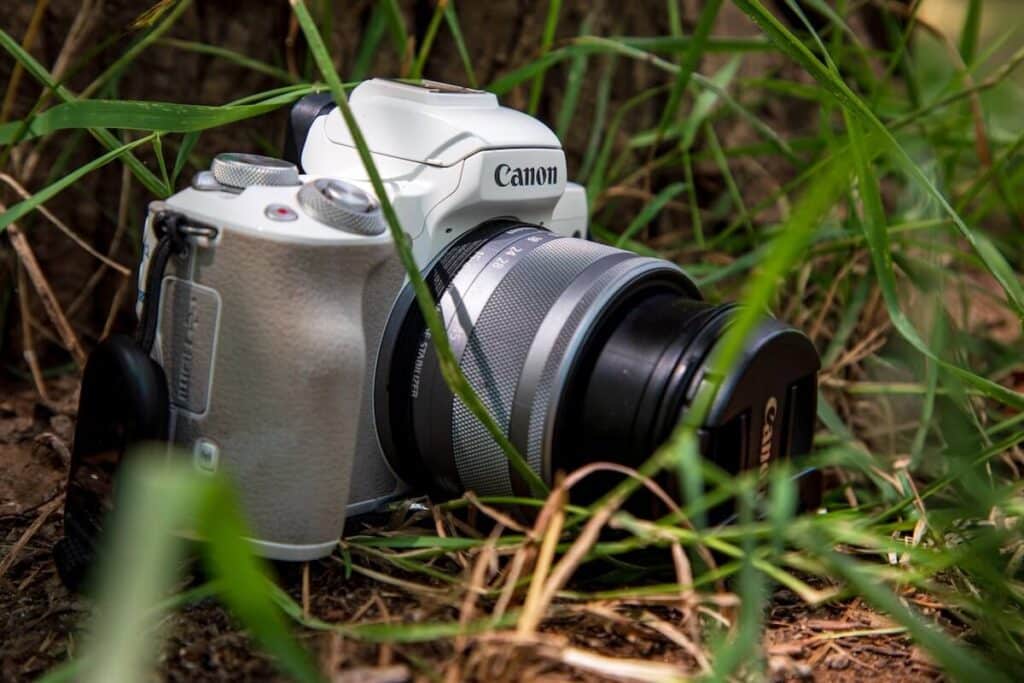
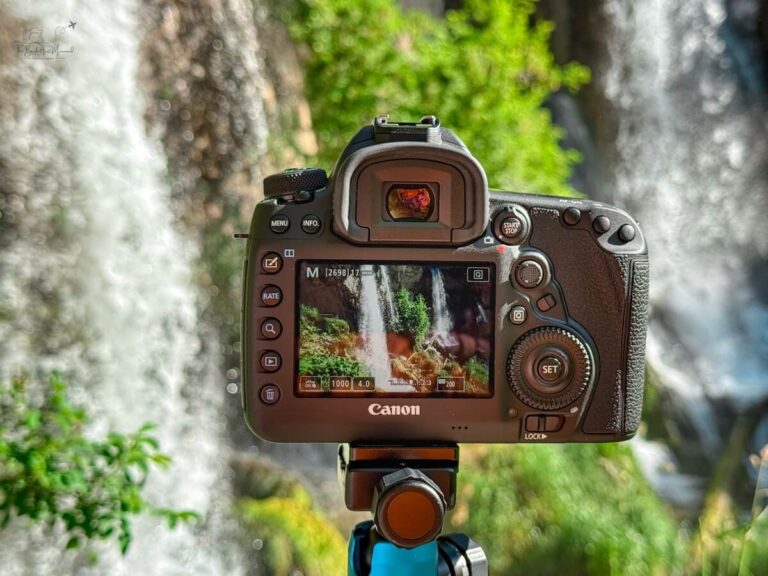
My Go-To Travel Cameras: Canon EOS M50 mark II | Canon EOS 5D mark IV | What’s in My Camera Bag?
A More Sustainable Way to Be a Travel Photographer
Hustle culture teaches photographers to push harder, shoot more, and always be producing.
But sustainability asks a different question: What allows you to keep creating without burning out?
Creativity isn’t an endless resource. It’s something you protect.
When you treat your energy, attention, and curiosity as finite, you start making choices that support longevity instead of short-term output.
You shoot with intention, edit with clarity, and give yourself space to rest without guilt.
Travel photography, at its best, is a relationship… not a grind. A relationship with place, light, movement, and memory. Like any relationship, it needs care, boundaries, and presence to thrive.
When photography becomes purely transactional, it loses the depth that made it meaningful in the first place.
And perhaps most importantly: you’re allowed to enjoy the places you work in.
You don’t have to earn the experience by documenting every second of it. You’re allowed to sit with the view, take the long way back, or leave the camera behind entirely.
Those moments don’t take away from your work. They’re often what make your work richer, more honest, and more human.
This is what sustainability in travel photography really looks like: not less ambition, but more alignment.
You’re Allowed to Experience the Adventure Too
If travel photography has started to feel heavier than it used to, let this be your reminder: you’re not failing, and you don’t need to push harder to fix it.
You’re allowed to experience the adventure, not just document it.
You’re allowed to…
- travel without turning every moment into content.
- enjoy a place without proving it was productive.
- take fewer photos, edit with less intensity, and still call yourself a travel photographer.
Trust me! This took years for me to realize after years of perfectionism and a productivity addiction.
When photography supports the experience instead of competing with it, creativity becomes something you can return to again and again.
Not because you have to, but because you want to. And that’s what makes a creative path sustainable in the long run.
If simplifying your process would help you enjoy photography again, start small.
- Change how you shoot.
- Change how you edit.
- Change what you expect from each trip.
You don’t need to overhaul everything at once, just enough to make space for the reason you picked up a camera in the first place.
Because the most meaningful images don’t come from chasing everything. They come from being there when it matters.
Where to Go Next
- Reconnect with Your “Why”
- The Why Journal helps travel photographers slow down, reflect, and reconnect with what photography means to them beyond content and output.
- Share Your Work with Others
- Shutterbugs Gone Wild is a supportive photography community where you can share photos, ask questions, and get inspired without algorithm pressure.
- Find More Experience-First Inspiration
- Explore more articles on intentional travel photography, creative sustainability, and simplifying your process so photography stays joyful.
More Travel Photography Resources
How to Become a Travel Photographer (and Actually Make Money With Your Travel Photos)
The Exposure Triangle For Beginner Adventure Photographers
Travel Photography Hashtags: 500+ Ideas & Ready-to-Use Sets
I Paid For a Pro Travel Photoshoot and Here’s What I Learned
More Adventure & Travel Resources
Adventure Bucket List Resources
I am here to help your travel adventures go as smoothly as possible! That way you can check off that bucket list with minimal complications and spending!
SHOP – Shop the best adventure gear and essentials on my Amazon Storefront – handpicked by a full-time adventuring mermaid!
AIRFARE – There are a few I use, but Aviasales is normally my go-to for flights without any extra fees or markups.
ACCOMMODATION – My two favorites are Booking.Com for hotels and VRBO for rentals.
GUIDED TOURS – If you are looking for quick and easy tours, check out GetYourGuide and Viator.
MULTI-DAY TOURS – For more in-depth tours that span several days, TourHub has many great options with reputable travel companies. Use my code (ALEXANDRA1GURU) for up to 5% off your next bucket list adventure.
TRANSPORTATION – You can either rent a car yourself with Discover Cars or do a guided bus tours like Big Bus Tours.
SIM CARDS – Avoid expensive roaming charges with an eSim card with Airalo. Personally, I prefer wifi boxes, and recommend WiFi Candy (get 10% of with the code THEBUCKETLISTMERMAID).
TRAVELER’S INSURANCE – Check out VisitorsCoverage for affordable insurance plans. If you are a nomad or remote worker, I would check out SafetyWing.
SEE MORE – Adventure Resources | Photography Resources
See Some Photos You Like?
Check out my full photography page for a full gallery and prices.